Gynecomastia Surgery Recovery: Healing, Scars and Returning to the Gym
Most men return to desk work about a week after gynecomastia surgery. A compression garment is worn for several weeks, swelling settles over weeks to months, scars keep fading for a year or more, and strenuous exercise, especially for the chest, waits until your surgeon clears it. Timelines vary with the technique used, the amount of tissue removed and how you heal, so your surgeon’s instructions always come first.
This guide covers what to expect at each stage, how scars heal, and how to return to the gym safely. If you are still working out whether surgery is the right step, start with our guide to gynecomastia in men: causes, symptoms and treatment options.
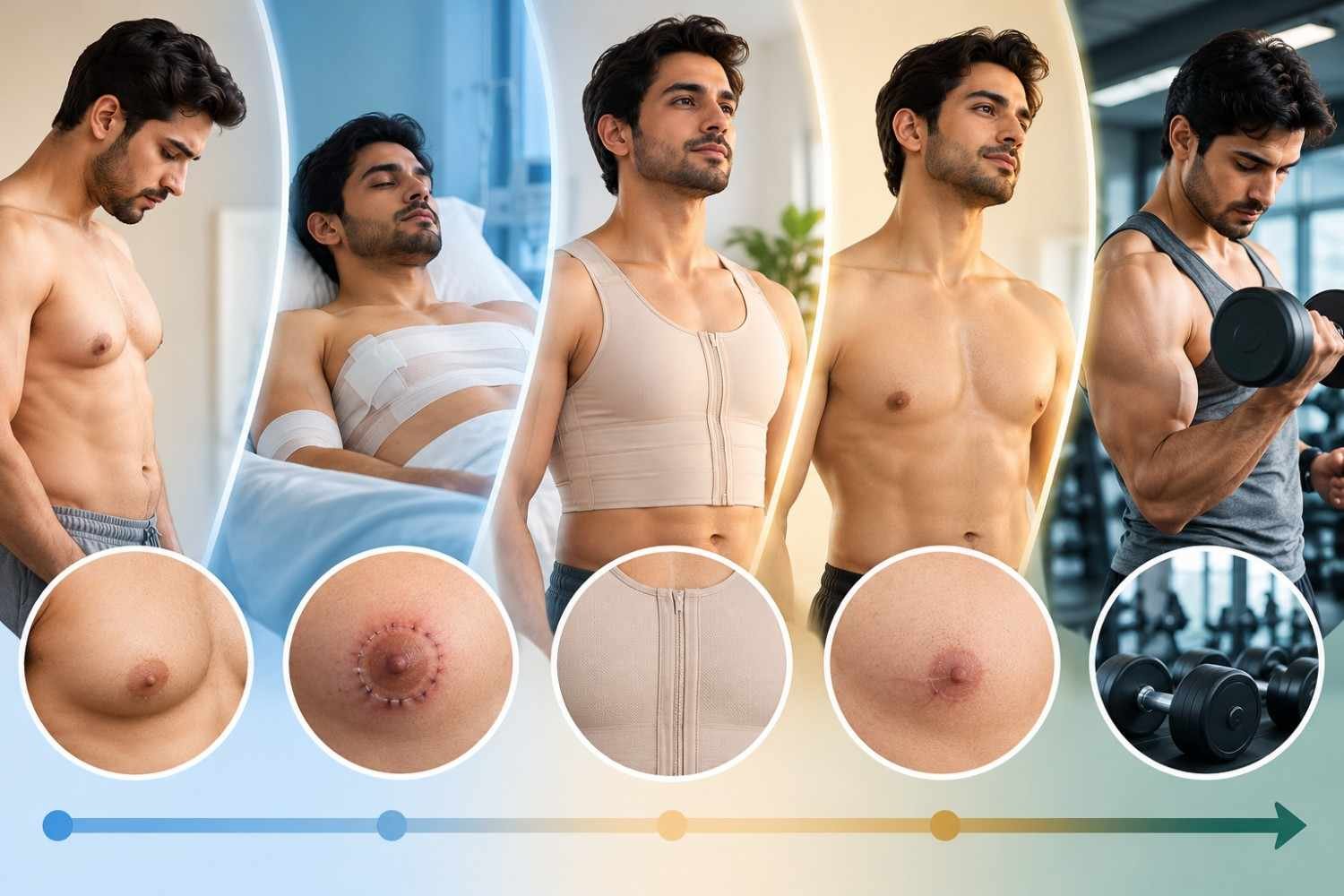
Gynecomastia Surgery Recovery at a Glance
| Stage | What is typical | Notes |
|---|---|---|
| First days | Swelling, bruising, tightness; compression garment on | Rest with short walks; take prescribed medicines |
| About 1 week | Many men return to desk work | No heavy lifting or strenuous exercise |
| Weeks 2 to 3 | Swelling and bruising reduce noticeably | Follow-up visit; garment still worn as directed |
| Weeks 4 to 6 | Most visible swelling settles; gradual return to training with clearance | Chest and heavy lifting only when your surgeon agrees |
| Months 3 to 6 | Contour continues to refine | Early look is not the final result |
| About 12 months | Scars mature and fade | Sun protection helps |
These are typical patterns, not promises. A liposuction-only procedure generally has a quicker recovery than one that also removes gland tissue or excess skin.
What Affects How Long Recovery Takes?
The technique. Liposuction alone, gland removal or a combination each involve different amounts of tissue handling. The American Society of Plastic Surgeons (ASPS) notes that, for men who need only liposuction, return to exercise and work is typically under a week in one surgeon’s practice. (ASPS blog)
How much tissue is removed, and whether excess skin needed treatment, which adds longer scars and a longer healing period.
Your general health and habits. Smoking impairs wound healing. Symmetrica’s gynecomastia page lists active smoking as a reason surgery may be delayed.
Stable weight. Fluctuating weight can affect both healing and the final result.
How closely you follow instructions on garments, activity and follow-up visits.
The First Few Days
Swelling, bruising and a feeling of tightness across the chest are normal in the first days. One Australian plastic surgeon reports that obvious swelling usually peaks around days three to five before easing. Mild discomfort is usually managed with the medicines your surgeon prescribes. Some surgeons use drains to reduce fluid build-up after surgery, so ask beforehand whether yours will. (ASPS blog)
Rest, but take short, gentle walks as advised, which help circulation.
Sleeping on your back with your upper body slightly raised is commonly advised for the first one to two weeks, to ease swelling and keep pressure off the incisions.
Keep dressings and wounds as your surgeon instructs, and attend scheduled follow-up visits so stitches and dressings can be checked.
The Compression Garment
You will usually be fitted with a compression garment at the end of the operation. It supports the new contour, limits swelling and reduces the risk of fluid collecting under the skin. Symmetrica’s gynecomastia page says it is typically worn for several weeks as directed by your surgeon. Wearing it as instructed is one of the most useful things you can do. Do not stop early because it is uncomfortable. Ask whether it can be loosened or adjusted instead.
Swelling and the Healing Chest
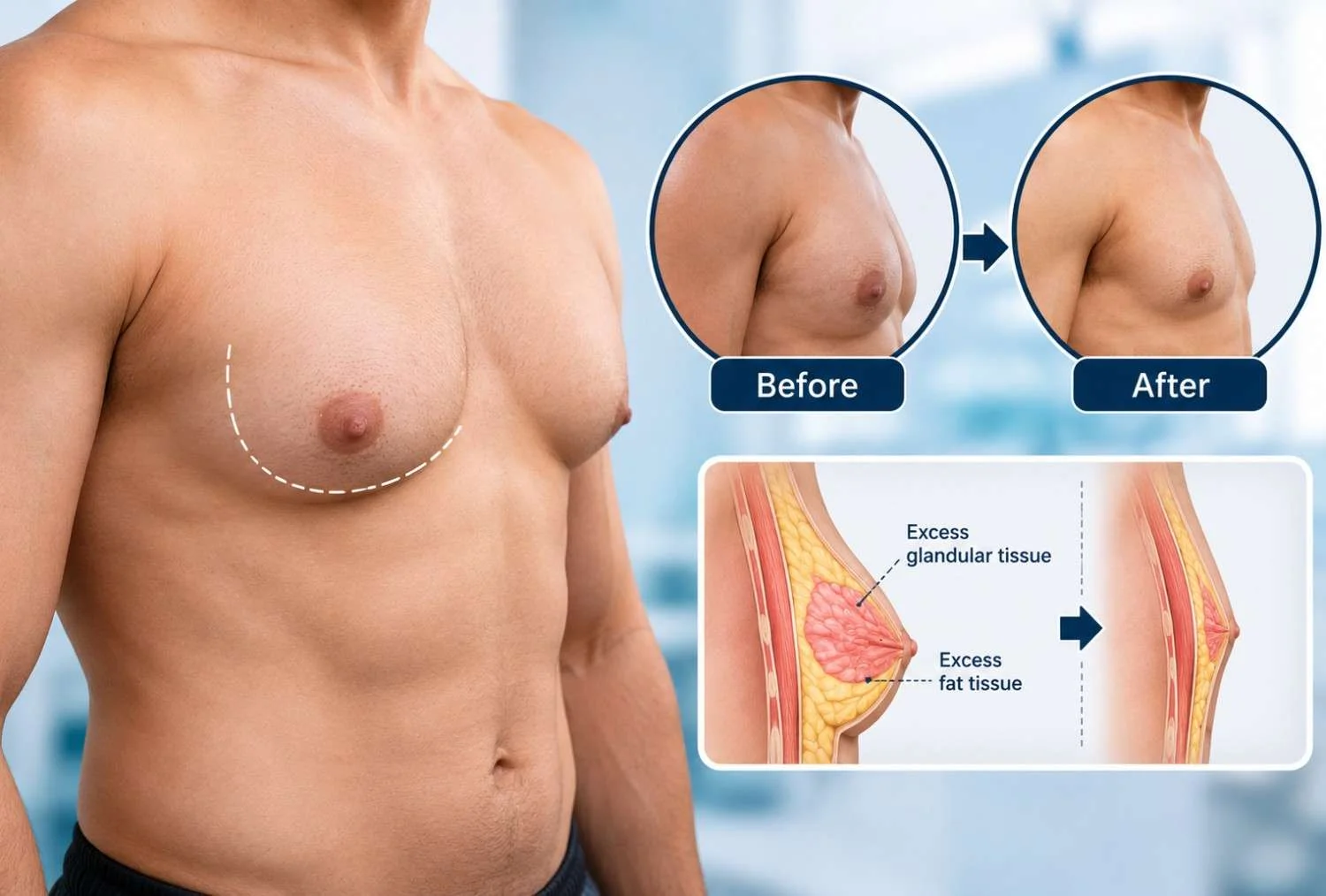
Your chest will look better quickly, but the early shape is not the final result. Swelling fades gradually over weeks to months, and the final contour continues to settle during that time. A few things are common and usually temporary: mild asymmetry while swelling resolves, firmness or lumpy feeling, bruising that changes colour, and altered nipple sensation. Persistent changes should be mentioned at follow-up.
Surgical risks are uncommon but real. They include bleeding (haematoma), fluid collection (seroma), infection, contour irregularities, changes in nipple sensation, visible scarring and possible tissue recurrence if weight or underlying causes change.
Scars After Gynecomastia Surgery
Every surgical incision leaves a scar, and how it looks depends partly on how you heal. Liposuction marks are small and fade over time. If gland tissue is removed, the incision is usually placed along the edge of the areola, where the change in skin colour helps it blend in. If excess skin has to be removed, scars are longer. Scars typically take a year or more to fully mature, and they often look their reddest around the first few months.
Follow your surgeon’s wound-care instructions, and do not pick at scabs or strips.
Protect healing scars from the sun. Plastic surgeons commonly advise sunscreen or covering the area once the wounds have closed, for at least the first year.
Ask your surgeon before using any scar cream, silicone sheet or massage, and when to start.
Let your surgeon know if a scar becomes raised, itchy, painful or keeps thickening, since earlier treatment is easier. Symmetrica also offers scar and keloid treatment.
Returning to Work and Daily Life
Symmetrica’s page says most patients return to desk work within roughly one week. Jobs that involve lifting or heavy physical work usually need longer. Another plastic surgeon advises planning for at least three to four weeks away if your job involves lifting or sustained arm movement above shoulder height. Avoid driving until you can move comfortably and are off any sedating medicines, and until your surgeon agrees.
Returning to the Gym After Gynecomastia Surgery
This is the question most men ask, and the honest answer is that surgeons differ. Published guidance gives a range. One US surgeon’s practice allows gym cardio at about two weeks and weightlifting at four. Another restricts heavy lifting and exercise for three weeks or until cleared. Another asks for at least six weeks before weights or upper-body training. All agree on one rule: do not decide for yourself, get a date from your surgeon.
A cautious pattern many patients follow, subject to your surgeon’s clearance, looks like this:
First weeks: Walking only. No lifting, pushing, pulling or strenuous exercise, and no bouncing or jarring activity.
After clearance: Light cardio and lower-body exercise, keeping heart rate and effort low, and wearing the garment if advised.
Later: Gradual upper-body and chest work with much lighter weights than before, building up over weeks.
Chest-focused and heavy lifting last, usually from about four to six weeks or later, and only with your surgeon’s agreement.
Stop and call your clinic if swelling returns, you feel a sharp or increasing pain, or bruising appears after a session. Going back too fast can cause fluid collection and slow healing.
Warning Signs: When to Call Your Surgeon
Symmetrica’s page says to contact the clinic immediately if you have a fever, spreading redness, heavy bleeding or sudden swelling on one side. Also call if pain is getting worse instead of better, if a wound opens or leaks pus, or if you feel unwell. Do not wait for your next scheduled visit.
Tips for a Smoother Recovery
Stop smoking and nicotine well before surgery, as advised, and stay off them afterwards.
Tell your surgeon about all medicines and supplements, including steroids, so any that increase bleeding risk can be managed. Never stop prescribed medicines without advice.
Arrange help at home for the first few days, and plan loose, front-opening tops.
Avoid alcohol while taking painkillers and while healing.
Keep your weight stable, and attend every follow-up visit.
Frequently Asked Questions
How long is recovery after gynecomastia surgery?
Most men return to desk work in about a week and to normal activities over several weeks. Swelling and the final contour take months to settle.
Is gynecomastia surgery painful?
Expect soreness, tightness and bruising for the first days. It is usually controlled with prescribed medicines, and most people find it improves quickly. Pain that worsens needs a call to your surgeon.
How long do I wear the compression garment?
Typically several weeks, as directed by your surgeon. Some surgeons stop earlier after liposuction only, and some extend it when more tissue was removed.
When can I go back to the gym?
Surgeons advise different timings, from light activity within a couple of weeks to six weeks before upper-body training. You need a date from your own surgeon, particularly for chest exercises and heavy lifting.
Will I have visible scars?
Yes, all surgery leaves scars. They are placed discreetly where possible, and they usually fade over a year or more, but results vary from person to person.
Can gynecomastia come back after surgery?
It can if weight, medicines or an underlying cause change. That is why the cause is assessed before surgery and weight is kept stable afterwards.
Next Step: Plan Your Surgery and Recovery with a Surgeon
A good recovery starts before surgery, with the right assessment, clear instructions and realistic expectations. If you are considering male chest contouring, a private consultation can explain what your recovery would involve.
Book a private consultation at Symmetrica, or call or WhatsApp +91 93398 30705. You can also read about the clinic’s approach on its gynecomastia surgery page.
Diamond Plaza, beside Sagar Family Restaurant, 2.5 Mile, near Check Post, Sevoke Road, Siliguri 734001.