Scalp Micropigmentation in Siliguri | Visual Hair Camouflage
Quick Answer: Scalp micropigmentation (SMP) is a cosmetic pigmentation procedure where small pigment impressions are placed in the scalp to resemble tiny hair follicles or short stubble from a normal viewing distance. It is designed to provide visual camouflage for thinning hair or scalp scarring—not to grow new hair or stop hair loss.
The overall effect depends on the chosen pigment, impression placement and density, existing hair characteristics, and individual scalp factors.
It helps to be clear about what SMP is not: it does not generate new hair, stimulate hair follicles, or treat underlying hair loss. It is neither decorative tattooing nor a surgical hair transplant—its purpose is aesthetic visual density.
Enquire about scalp micropigmentation: Speak with a specialist at Symmetrica on +91 93398 30705, message on WhatsApp, or request a consultation online.
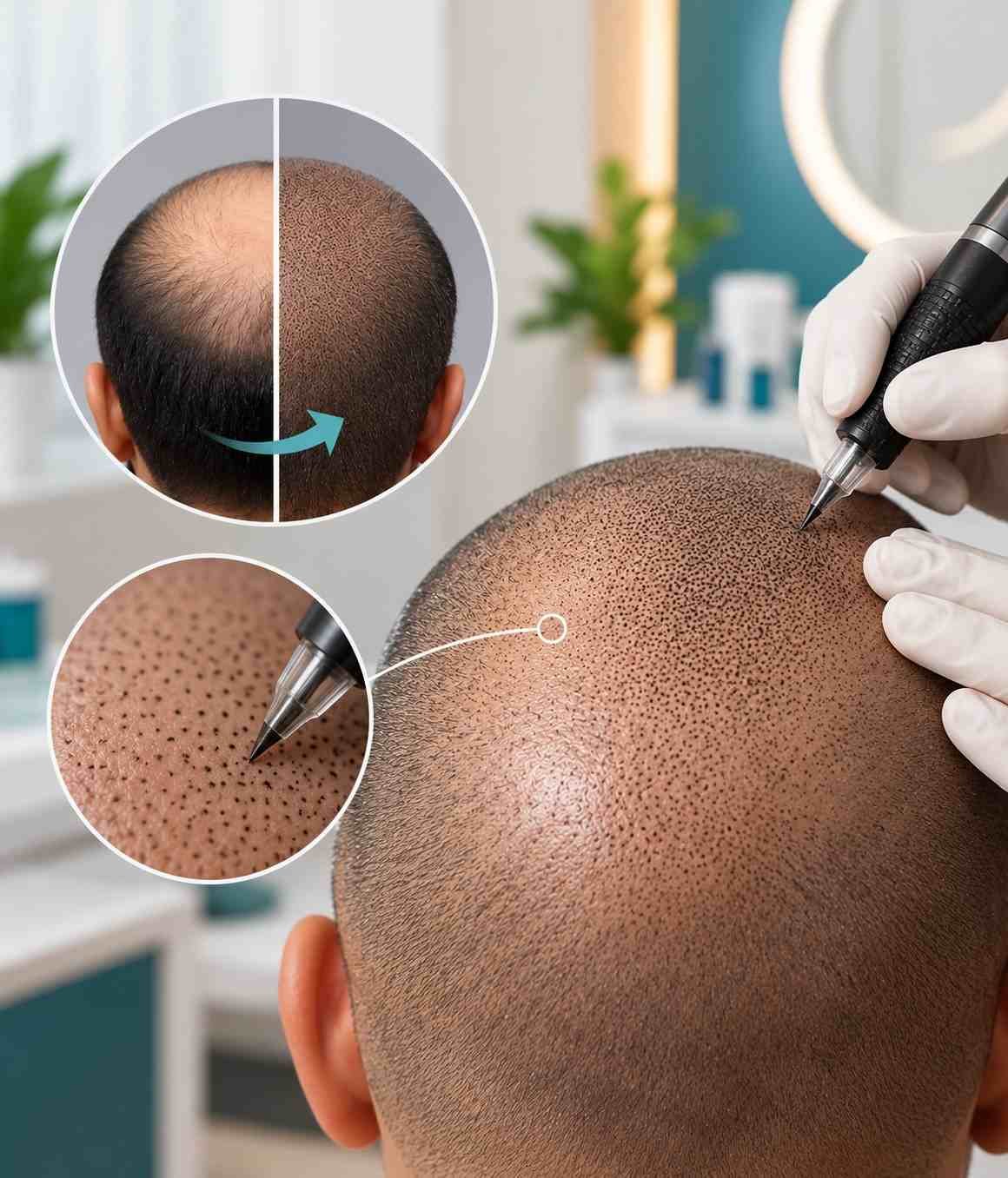
What Concerns SMP May Help Camouflage
People explore scalp micropigmentation for several appearance-related reasons. Whether treating scars, transplanted areas, or specific thinning patterns, suitability depends on the individual condition of your scalp and a clinical assessment.
SMP is commonly explored to address:
- The appearance of thinning hair across selected areas
- Visible scalp exposure through hair
- The look of a closely cropped or shaved hairstyle
- Selected areas of reduced hair density
- Selected scalp scars, where clinically appropriate
- The visual contrast of the scalp following a hair transplant
Note: SMP does not treat the underlying cause of hair loss, and it does not suit every pattern of thinning equally well.
SMP for Different Concerns
In general, small pigment impressions are placed in target scalp zones to create the visual effect of hair follicles or increased density. The approach varies depending on the desired outcome:
SMP creates the appearance of reduced scalp visibility in selected areas through cosmetic pigmentation. It reduces contrast between skin and hair, though it does not make existing hair thicker or increase actual follicle count.
Pigment impressions can mimic the visual effect of short, cropped hair follicles for individuals who prefer a shaved look. A suitable result depends on hairline design, scalp tone, and overall treatment planning.
SMP may sometimes be considered to soften the visual appearance of selected scalp scars. Suitability depends on the scar’s age, texture, tissue healing, and skin tone match.
Used to soften contrast between hair and scalp following hair restoration surgery. Pigmentation is not a substitute for clinical evaluation if there is an active scalp condition or surgical complication.
Who May Be Suitable for SMP?
Candidacy depends on your hair pattern, scalp health, skin characteristics, treatment history, and aesthetic goals.
- Overall scalp skin health and suitability for pigmentation
- Existing hair density and natural hair growth pattern
- Previous scalp surgery, trauma, or scarring history
- History of abnormal scarring or pigment sensitivities
- Absence of active scalp inflammation or infection
- Realistic expectations regarding color, maintenance, and hairline definition
- Does not create new hair follicles or restore real growth
- Does not stop or reverse the biological progression of hair loss
- Does not replace surgical hair transplantation
- Does not guarantee total scalp concealment under all lighting conditions
- May require periodic pigment adjustments as natural hair changes over time
Scalp Micropigmentation vs Hair Transplant
SMP uses pigmentation for visual illusion, while a hair transplant surgically transfers real hair follicles. Neither is universally superior—the choice depends on your individual goals and scalp condition.
| Consideration | Scalp Micropigmentation | Hair Transplantation |
|---|---|---|
| Main Purpose | Visual camouflage of thinning or bare areas | Surgical relocation of existing hair follicles |
| Follicle Transfer | No follicles are created or transferred | Existing follicles moved from donor area |
| Cosmetic Appearance | Pigment effect imitating follicles/density | Real hair growing from transplanted follicles |
| Procedure Type | Cosmetic pigmentation procedure | Surgical procedure |
| If Hair Loss Progresses | Look changes as natural hair recedes; future touch-ups planned | Non-transplanted hair may continue thinning |
| Long-term Planning | Periodic pigment refreshers or adjustments | Long-term surgical planning and follow-up reviews |
Comparing SMP, PRP, and Mesotherapy
Cosmetic pigmentation designed exclusively to create a visual follicle or density effect.
Uses concentrated blood plasma components to support active follicle health in selected hair-loss types.
Targeted micro-injections of nutrient or medical solutions tailored to scalp conditions.
Consultation & Procedure Workflow
A clinical consultation establishes scalp health, pigment selection, and visual design before any application begins.
Evaluation of scalp health, hair loss pattern, and personal expectations regarding hairline and density.
Custom pigment tone selection and detailed visual planning of the target treatment zone.
Precise placement of micro-pigment impressions across planned areas using standard techniques.
Examination of pigment distribution, optical density balance, and assessment for follow-up sessions.
Specific instructions on scalp care, sun protection, and planning long-term pigment touch-ups.
Who May Consider Scalp Micropigmentation
SMP may be worth discussing if:
- You want to reduce visual contrast between your hair and scalp in selected areas
- You prefer a closely cropped or shaved hairstyle and want the look of short hair follicles
- You are seeking to camouflage selected scalp scars or soften post-transplant contrast
- Your scalp is healthy, free from active infections or severe inflammation, and suitable for pigment
- You understand that SMP creates a cosmetic visual effect rather than growing actual hair
You may be advised to wait or reconsider if:
You have active scalp inflammation, infections, or allergies to pigments, a history of abnormal scarring, or ongoing rapid hair loss that requires primary medical diagnosis first. A clinical assessment helps determine if cosmetic pigmentation is safe and appropriate for your scalp.
Benefits, Safety & Cost Considerations
For suitable candidates, possible benefits include the look of defined hair follicles, reduced contrast between hair and scalp, and the effect of a shaved style.
Keep in mind: SMP creates a visual effect, not new hair. Results vary based on skin characteristics, existing hair, and planning. Colour may soften over time, and adjustments may be needed.
SMP involves placing pigment into the skin. Possible effects include temporary redness, tenderness, swelling, and mild irritation.
Less commonly, infection, allergic reactions, or unwanted pigment changes can occur. Pigment procedures require hygiene and careful review of your skin history before proceeding.
Recovery depends on the technique, area treated, and skin response. You will receive guidance on washing, friction, exercise, sun protection, and skincare products while the scalp settles.
A brief period of temporary redness or sensitivity is common. Follow the tailored aftercare instructions provided for your specific plan.
The appearance of SMP changes over time due to pigment properties, skin response, sun exposure, and scalp care.
Duration varies between individuals, and periodic touch-ups or maintenance may be considered to maintain optimal optical density.
Cost depends on the size of the treatment zone, pattern of thinning, desired complexity, scar camouflage needs, number of sessions, and long-term maintenance.
Because these factors differ for everyone, cost cannot be fixed before an individual assessment. Enquire directly for service and pricing details.
Symmetrica is located at Diamond Plaza, 2.5 Mile, Sevoke Road, Near Check Post, Siliguri, West Bengal 734001, India.
Serving patients across North Bengal including Matigara, Bagdogra, Jalpaiguri, Darjeeling, Kurseong, and Kalimpong. Enquire in advance to verify service availability and schedule an assessment.
Frequently Asked Questions
What is the purpose of SMP?
To cosmetically alter the appearance of thinning, bare, or scarred areas of the scalp by placing micro-pigment impressions. It is visual camouflage, not a hair-growth treatment.
Is SMP suitable if my hair is thinning but not gone?
It may be considered to reduce contrast between scalp and hair in selected areas, depending on your current hair density and how your hair loss is progressing. Planning around existing hair is key.
Is SMP suitable for a closely cropped hairstyle?
Yes, many use it to create the look of short hair follicles for a shaved or closely cropped style. Suitability depends on your scalp characteristics, hairline preferences, and treatment plan.
How is SMP different from a hair transplant?
A hair transplant is a surgical procedure that moves living hair follicles so real hair grows from them. SMP only applies pigment to mimic the visual appearance of follicles.
Does SMP encourage hair growth?
No. It does not stimulate hair follicles or reverse the biological causes of hair loss. The benefit is strictly visual.
Will I need maintenance?
Possibly. Over time, pigment appearance can lighten or shift, so periodic touch-ups or adjustments may be considered to maintain optical density.
What side effects should I expect?
Temporary redness, tenderness, or mild swelling are common. Less commonly, infection, allergic reactions, or pigment changes can occur.
What about recovery and aftercare?
Recovery varies depending on technique and skin response. You will be given specific guidance on gentle washing, avoiding friction, limiting sun exposure, and using recommended skincare products.
How does SMP compare with PRP?
PRP uses a preparation derived from your own blood to support existing hair follicles, while SMP creates a visual cosmetic effect using pigment. They serve different purposes and are not interchangeable.
How do I enquire about SMP at Symmetrica in Siliguri?
Call +91 93398 30705 or visit our contact page to enquire about current service availability, schedule an in-person assessment, and discuss cost details.