
About Us
Contrary to popular belief, Lorem Ipsum is not simply random text. It has roots in a piece of classical Latin literature from 45 BC, making it over 2000 years old.
Contrary to popular belief, Lorem Ipsum is not simply random text. It has roots in a piece of classical Latin literature from 45 BC, making it over 2000 years old.
Shave on Monday, stubble by Wednesday. Wax at the weekend, then wait a fortnight for the ingrown hairs to settle. Thread the upper lip every few weeks and plan around it. If that routine sounds familiar, you already know why people start looking into laser hair removal.
Laser treatment is designed to reduce unwanted hair over a course of sessions. It works on the follicle, the structure that produces the hair, and it is most effective on hairs in a suitable stage of their growth cycle, which is why one visit is never enough. What it offers is gradual, long-term reduction, not hair that never returns.
At Symmetrica in Siliguri, treatment planning begins with an assessment of your skin and hair, not with a package of sessions. That order matters. The right plan for a woman with fine upper-lip hair is very different from the right plan for a man with a dense back.
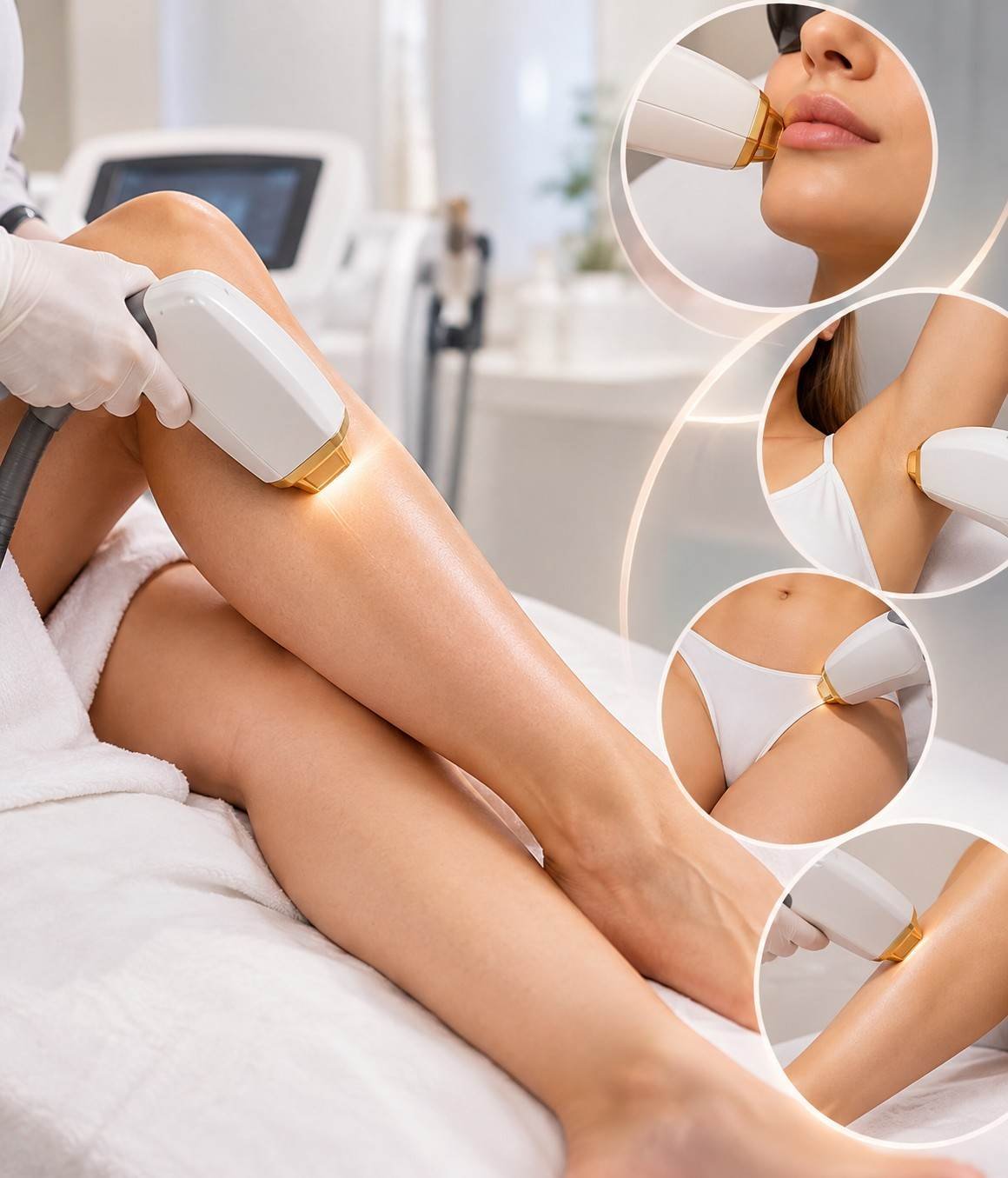
Shaving, waxing, threading and creams are all reasonable choices, and many people use them happily for years. They share one limit: they deal with the hair you can see, so the cycle begins again. Laser takes a different route.
| Method | What it does | Typical effect |
|---|---|---|
| Shaving | Cuts hair at the skin surface | Hair is back within days |
| Waxing and threading | Pull hair out from the root | Regrowth over weeks, and the hair is not reduced over time |
| Depilatory creams | Dissolve hair at the surface | Short-term smoothness |
| Laser | Targets the follicle that makes the hair | Gradual reduction across a course of sessions |
The laser directs light energy toward the pigment in the hair. The follicle absorbs the energy, and it is damaged in a controlled way, which can weaken it and slow or reduce further growth. Because only hairs in suitable phases respond well, the effect builds over time.
It is more accurate to speak of long-term hair reduction than of permanent removal. Some follicles may be damaged only partly, and some hairs may stay active. Laser does not destroy every follicle.
Not all hairs grow at the same time. Each follicle moves through a cycle, and laser works best on hairs that are in the growth phase.
| Phase | What is happening | Why it matters for laser |
|---|---|---|
| Growth (anagen) | The hair is actively growing and attached to a pigmented follicle | Best response to treatment |
| Transition (catagen) | Growth stops and the follicle shrinks | Limited response |
| Resting (telogen) | The hair rests, then sheds | Poor response; these hairs are caught in later sessions |
At any one session, only a portion of the hairs in an area are in the growth phase. Later sessions catch groups that were resting before. That is why a course is needed. No fixed number applies to everyone: the number and spacing of sessions depend on the body area, hair characteristics, growth pattern, skin characteristics and your individual response.
People seek treatment for unwanted hair on the face, underarms, arms, legs, chest, back, bikini area and other selected areas. Whether it suits you depends on your skin type, hair colour and thickness, the treatment area, any underlying cause of excess hair growth and your medical history. An assessment settles this.
One note: sudden or unusual excess hair growth sometimes needs medical evaluation for an underlying cause, rather than cosmetic treatment alone.
Laser Hair Removal for Facial Hair: Facial hair is a common reason people book, especially on the upper lip, chin, jawline and sideburn area. It also behaves differently from body hair: it often grows in shorter cycles, so sessions may be spaced differently and results tend to need more careful expectations. For women with persistent or marked facial hair, hormonal factors can sometimes contribute, and a broader assessment may be appropriate alongside treatment.
Treatment can be customized across several body parts depending on your needs, hair type, and routine goals.
Most people want a clean upper lip, chin or jawline without daily upkeep, or fewer shadows after shaving.
Often the first area treated: patients usually want less stubble, fewer razor bumps and a lower-effort routine.
Large areas where the goal is usually smoother skin and far less frequent shaving or waxing.
Mostly sought by men, for easier grooming or comfort, and by some women for selected areas.
A sensitive area, where patients value privacy and reduced irritation from shaving and waxing.
Goals and target areas often differ by gender, though the core mechanism remains the same.
| Group | Common Target Areas | Primary Goals & Expectations |
|---|---|---|
| Men | Chest, back, shoulders, neck, and beard line edges | Hair Reduction & Easier Grooming (thinner, slower-growing hair rather than a completely hairless look) |
| Women | Facial hair, underarms, arms, legs, bikini area | Long-term Smoothness (stopping shaving, reducing ingrown hairs and waxing irritation) |
You begin with a conversation, not a machine. A clinician looks at your skin and hair, asks about your medical history, medicines, recent sun exposure and previous hair removal, and agrees which area to treat. The area is then prepared as the clinic advises, usually shaved and cleaned, and protective eyewear is provided.
During treatment, the laser is passed over the area in pulses, with settings chosen for your skin and hair. Most people feel warmth or a brief snapping sensation; how much varies by person and area. Afterwards, you are given aftercare instructions, and the next session is planned around your hair growth and how your skin responded. Session length depends on the area, so no single time applies.
Most people describe warmth, a snapping or pinching feeling, or brief discomfort. It is not pain-free for everyone. Sensation depends on the treatment area (the upper lip and bikini area are often more sensitive), hair thickness, the settings used and your own sensitivity. If a session feels too uncomfortable, say so; the settings can be reviewed.
Understanding your recovery, hair reduction timelines, and long-term results comes from proper planning and medical clarity.
Mild redness or sensitivity is common. Follow given instructions, protect treated skin from excessive sun, avoid scrubbing or harsh products, and use recommended skincare.
Hair grows back thinner, finer, or more slowly, usually noticed after a few sessions. Realistic goals focus on long-term reduction rather than total elimination.
Active follicles or hormonal influences can stimulate new growth over time. Regrowth does not mean treatment failure; it reflects natural hair biology.
Response differs with skin tone, hair colour, thickness, and laser settings. Dark, coarse hair on lighter skin responds best. Very light, grey, white, or fine hair absorbs less energy and may respond poorly. Deeper skin tones require appropriate settings and careful assessment.
In susceptible individuals, treated skin may temporarily darken or lighten. Correct settings, proper assessment, and avoiding sun exposure before and after sessions significantly reduce the risk of side effects.
Inform your clinician if you have active skin irritation or infection, a recent tan, certain medications, a localized skin condition, or sudden hair growth prior to treatment.
Cosmetic laser reduces hair but does not treat underlying hormonal causes. Conditions like PCOS can cause persistent growth; medical evaluation may be recommended alongside laser treatment.
Cost depends on the treatment area, size, hair density, number of sessions, and maintenance needed. Quoting a single price without seeing your hair and skin would be misleading—book a consultation to understand your tailored plan.
| Aspect | Details & Considerations | Clinical Approach |
|---|---|---|
| Cost Factors | Area size, hair density, required session count, maintenance needs | Personalized Pricing |
| Regional Access | Accessible for patients from Matigara, Bagdogra, Jalpaiguri, Darjeeling, Kurseong, & Kalimpong | Central Siliguri Hub |
Proper assessment, trained medical professionals, honest expectations, and transparent costs matter far more than equipment models or promotional packages.
Laser & Skin Quality: For pigmentation, scars, or texture, consider Laser Skin Resurfacing. For general skin health without hair reduction, explore HydraFacial, Chemical Peels, and Medical Facials.
Scalp & Hair Loss: If experiencing thinning scalp hair, refer to PRP Hair Treatment for regrowth or Hair Transplant for surgical restoration.
Laser hair removal works best when the plan fits you. Book a consultation, and we will assess your skin and hair and explain what to expect.
Laser hair removal uses light energy to target the pigment in hair and damage the follicle, so that hair grows back more slowly, finer or less densely over time. It is a course of treatments for long-term hair reduction, and it works best on hairs in the growth phase.
Laser hair removal gives long-term hair reduction, not a guarantee of permanent removal. Some follicles stay active, hormones can stimulate new growth, and treated areas may need maintenance sessions. Results differ between people and between body areas, depending on skin, hair and individual response.
There is no fixed number. Several sessions are usually needed, spaced weeks apart, because only hairs in the growth phase respond at each visit. The number depends on the body area, hair thickness and colour, growth pattern, skin characteristics and how you respond. A clinician can estimate it after assessment.
Most people feel warmth, a snapping or pinching sensation, or brief discomfort, but it is not pain-free for everyone. Sensitivity depends on the area treated, hair thickness, the settings used and the individual. The upper lip and bikini area are often more sensitive. Tell the clinician if it is too uncomfortable.
Laser can reduce facial hair on areas such as the upper lip, chin and jawline, and it is a common reason people seek treatment. Facial hair often grows in shorter cycles, so expectations should be realistic. Persistent facial hair in women may have hormonal contributors, which a medical assessment can consider.
Yes. Men often seek treatment for the chest, back, shoulders, neck and beard-line edges. Many aim for reduction rather than a hairless look, so hair becomes thinner and easier to groom. Dense or thick hair is often treated well, but results and the number of sessions vary.
Darker skin can be treated, but it needs careful assessment and settings chosen for that skin, because more pigment in the skin raises the risk of side effects such as darkening or burns. Not every laser suits every skin tone. A professional assessment decides what is appropriate.
Laser works best on dark, coarse hair, because it targets pigment. Very light, grey, white or fine hair absorbs less energy and may respond poorly or not at all. A clinician can assess your hair and tell you whether laser is likely to be worth trying.
Yes. Some follicles stay active, hormonal changes can stimulate new growth, and treated areas may need maintenance sessions. Regrowth is usually finer, lighter and sparser than before, but a guarantee that hair never returns cannot be given. Long-term reduction is the realistic aim.
Cost is not fixed. It depends on the treatment area and its size, hair density, the number of sessions, the treatment plan and any maintenance. Symmetrica explains the plan and expected cost for your chosen area after a consultation, so there are no surprises about the course.
Follow your clinic’s instructions. In general, avoid waxing, threading or plucking when told to, avoid a fresh tan, follow sun-exposure advice, and tell the clinician about skin conditions and medicines. The area is usually shaved and cleaned beforehand, as instructed.
Avoid excessive sun on treated skin, scrubbing or irritating the area, and harsh products. Mild redness or sensitivity for a short time is common. Follow the specific aftercare advice you are given, which depends on the area treated and your skin.