Hair Treatment in Siliguri
Flakes on a dark shirt that keep coming back. Hair that turns frizzy by midday, snaps when you brush it, or no longer feels the way it did a few years ago. A scalp that itches or feels tight, and a quiet worry that the hair itself is getting weaker.
These are all hair concerns, but they are not the same concern. A flaky scalp, a damaged hair shaft and gradual thinning start in different places and call for different answers, which is why choosing a popular treatment before understanding the problem rarely works well.
At Symmetrica in Siliguri, a hair and scalp consultation begins with what you have noticed and how long it has been going on. Some concerns suit a cosmetic hair treatment. Some need medical assessment first. A few belong with other specialist services, linked further down this page.
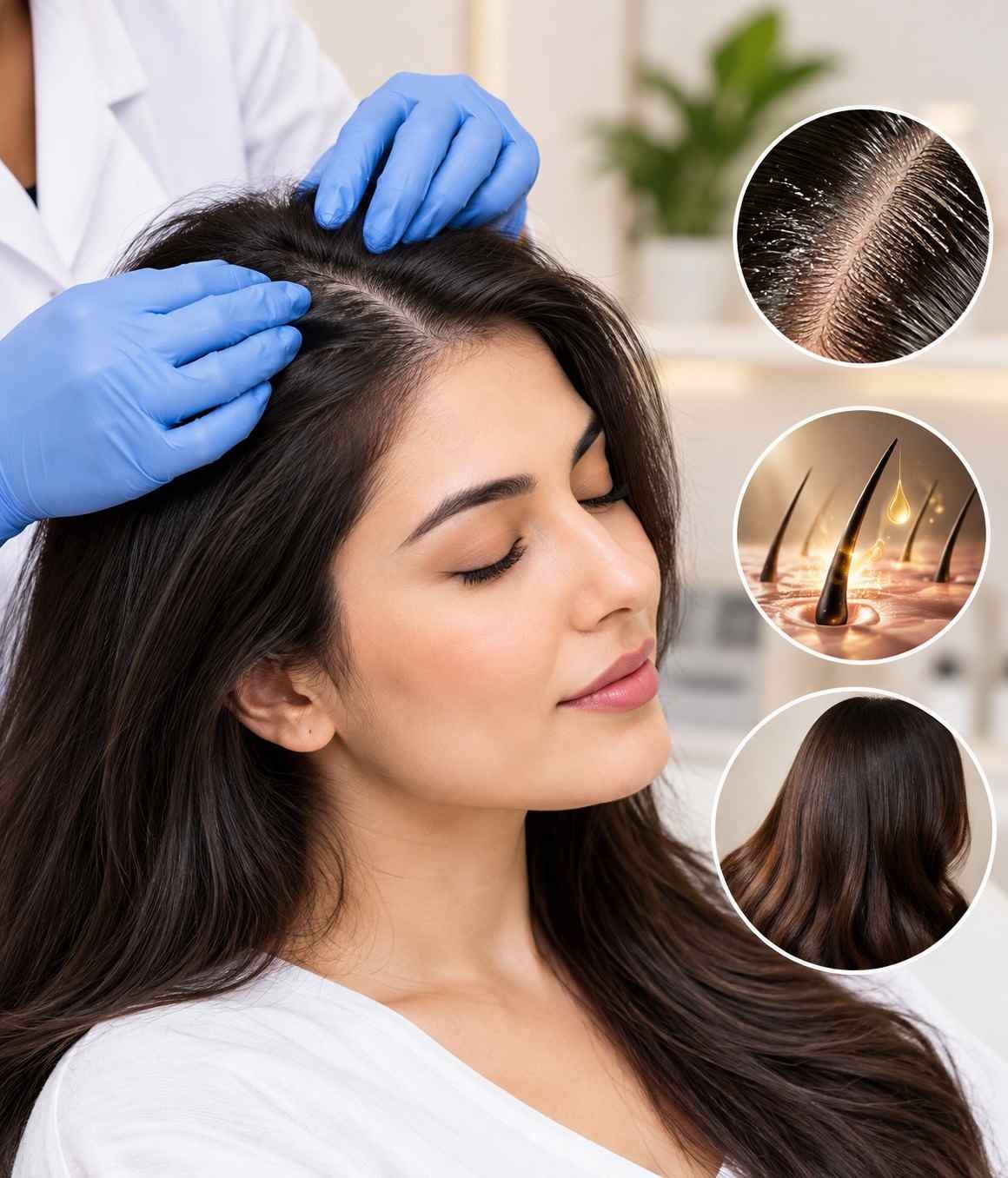
Not Every Hair Concern Starts in the Same Place
Three things are easy to confuse. The scalp is the skin hair grows from. The follicle is the small structure beneath the skin that produces each hair. The hair shaft is the strand you can see and style. Problems in each behave differently, and so does the treatment.
| Where it starts | What you may notice | What it usually calls for |
|---|---|---|
| The scalp | Flakes, itching, tightness, oiliness, irritation | Scalp-focused care, and assessment if symptoms persist |
| The hair shaft | Dryness, frizz, rough texture, breakage, tangling | Gentler hair-care habits and, where suitable, a cosmetic hair treatment |
| The follicle | Increased shedding, a widening parting, thinning, a receding hairline | Assessment of the cause, then options chosen for that cause |
This matters because the same word, “hair problem”, covers all three. Dandruff is a scalp matter. Frizz and breakage mostly concern the shaft and how it has been treated over the years. Progressive thinning involves the follicle, the hair growth cycle and sometimes wider medical factors. Matching the treatment to where the problem starts counts for more than which treatment is fashionable.
Dandruff and Scalp Care in Siliguri
Visible flakes are one of the commonest reasons people ask about hair treatment, and one of the most misunderstood. Dandruff is not always a dry scalp. An oily scalp can flake too. Contributors can include sensitivity to hair products, infrequent or irregular washing, and a yeast that normally lives on the scalp and, in some people, becomes troublesome. Because the contributing factors differ, no single treatment suits everyone.
It helps to separate ordinary flaking from persistent symptoms. Occasional flakes that settle with appropriate scalp care are one thing. Itching that does not stop, marked redness, pain, sores, scaly patches or hair loss in the affected area are another. Those may reflect a medical skin condition, and they need a doctor’s assessment, sometimes by a dermatologist, rather than a cosmetic hair treatment alone. A consultation can help you work out which of the two you are dealing with.
Treatments for Dry, Frizzy and Damaged Hair
Dry hair feels rough and looks dull. Damaged hair breaks. Frizzy hair is difficult to manage because the outer surface of the strand is roughened and takes up moisture from the air. Repeated heat styling, colouring, bleaching, chemical straightening, harsh washing, friction and sun can all contribute, and most people have more than one of these in their routine.
Two things are worth knowing:
- First, the hair you can see is not living tissue, so it cannot heal itself the way skin does. What treatment can do is improve how the shaft looks, feels and behaves, often for a limited time, and appropriate hair-care habits help it last.
- Second, improving the feel of the hair is a different job from making hair grow. A treatment that leaves hair smoother does nothing for the follicle, and no cosmetic treatment can reverse every kind of damage.
Improving Hair Texture and Manageability
Frizz, a rough texture and breakage caused by styling and chemical processing are the concerns people most often bring when they want hair that is simply easier to live with. The right approach depends on the current condition of your hair, what it has been through, and what you want it to do.
Four words get used as if they were interchangeable, and it is worth keeping them apart:
- Smoothing makes hair feel smoother and easier to manage.
- Straightening changes the shape or curl of the hair, by heat or chemicals.
- Repair describes limited improvement in how damaged hair looks and feels.
- Regrowth is new hair from the follicle, which none of the other three provides.
You may also hear the name “hair Botox”. It is a cosmetic treatment name generally linked with smoother, more manageable hair. It is applied to the hair and is not injectable botulinum toxin, the treatment used for expression lines. Products sold under the name differ, so results differ too, and it is not a treatment for hereditary hair loss.
When Hair Concerns Need More Than a Cosmetic Treatment
Some changes deserve a closer look rather than a smoothing treatment or a new shampoo. Working out the cause comes before choosing a treatment.
Sudden or Heavy Shedding
Increased hair fall from the root requires medical evaluation rather than simple surface conditioning or cosmetic products.
Progressive Thinning
A widening parting, receding hairline, or patchy loss points to follicular changes that call for a targeted diagnosis.
Persistent Scalp Symptoms
An inflamed, painful, or persistently irritated scalp needs medical assessment first before applying hair treatments.
Hair Care, Hair Loss Treatment & Hair Transplant Are Different
People often treat these as three rungs of one ladder. They are three different answers to three different problems.
| Category | Hair Treatment (This Page) | Hair Loss & PRP | Hair Transplant |
|---|---|---|---|
| Addresses | Scalp comfort, hair quality, texture and manageability | Selected shedding and thinning concerns | Areas of hair loss, through surgery |
| Typical Concern | Dandruff, dryness, frizz, breakage | Thinning, increased shedding | Receding hairline, bald or thin areas |
| Nature | Cosmetic and care-based; persistent symptoms need medical check | Medical and non-surgical, including PRP where suitable | Surgical, for selected patients |
| Read More | You are here | Hair Loss & PRP | Hair Transplant |
Finding the Right Approach for Your Hair Concern
A useful consultation is a conversation first. All of your history points toward one question: is this a concern for a cosmetic hair treatment, scalp care, medical assessment, or specialist hair services?
Manageability & Smoothness
Cosmetic care makes hair easier to comb, style, and handle while creating a softer, smoother surface with less frizz.
Scalp Comfort
Improves everyday comfort and flaking in suitable cases, while persistent irritation or redness is referred for medical care.
Thinning & Growth
Thinning is a separate goal altogether. Cosmetic treatments do not guarantee regrowth or reverse permanent follicle damage.
What to Consider Before and After a Hair Treatment
Before Treatment
Mention any scalp itching, soreness, or irritation. Tell your clinician about past chemical treatments, colouring, smoothing, and products your skin reacted to.
Aftercare Guidance
Follow specific instructions given for your treatment. Avoid unnecessary scalp irritation, use recommended products, and seek medical care if symptoms worsen.
Hair Treatment Cost in Siliguri
There is no single price for hair treatment because it covers different concerns. Cost depends on the treatment type, area addressed, products selected, and the number of sessions required. Quoting a figure before understanding your hair would be guesswork.
Patients Across North Bengal
Symmetrica is located in Siliguri, West Bengal—a practical location for planned clinic care for patients from Matigara, Bagdogra, Jalpaiguri, Darjeeling, Kurseong, and Kalimpong. If traveling in, ask at the start how many visits your treatment will require.
Explore Hair Restoration and Scalp Services
- Hair Loss & PRP: For shedding and thinning, including PRP in selected cases.
- Hair Transplant: The surgical option for selected patients with areas of loss.
- Beard and Eyebrow Transplant: Restoration of selected facial-hair areas.
- Scalp Micropigmentation: Creating the appearance of hair density using pigment.
Choose a Treatment That Matches Your Hair Concern
Scalp care and hair-shaft care solve different problems. Breakage is not hair loss. A smoother surface is not regrowth. The clinic’s medical team includes plastic surgeon Dr. Amit Kr. Choudhary and consultant cosmetic physician and trichologist Dr. Sneha Bhagat.
Discuss Your Hair and Scalp Concern
Bring your questions, your hair history, and any products you use for a complete evaluation.
Frequently Asked Questions
1. How do I choose between scalp care and a cosmetic hair treatment?
Look at where the problem is. Flakes, itching and irritation concern the scalp. Frizz, roughness and breakage concern the hair itself. Many people have both, and a consultation can sort out which to address first.
2. What can I do about frizz?
Frizz is usually a surface problem, made worse by heat, chemical processing and dryness. Gentler handling and suitable products help, and a cosmetic treatment may improve manageability.
3. Why does my hair keep breaking?
Breakage often follows heat styling, colouring, bleaching, tight styles or rough brushing. Sudden or heavy breakage, or hair falling from the root, is worth having assessed by a doctor.
4. How do previous chemical treatments affect what I can have?
Colouring, bleaching, straightening and smoothing all change the condition of the hair, and some products do not suit hair that has been processed repeatedly. Tell the clinician about your history.
5. Should scalp irritation be dealt with first?
Often, yes. A scalp that is inflamed, sore or persistently irritated should be assessed and treated before any cosmetic treatment is applied to the hair or scalp.
6. Why are hair texture and hair density treated differently?
Texture is about the hair shaft, and density is about how many hairs the follicles produce. A smoothing treatment can improve texture, but does nothing for follicle density.
7. How do I book a hair and scalp consultation?
Use the appointment page, call +91 93398 30705, or write through the contact page. The first visit is an assessment and does not commit you to a treatment.