Anti-Ageing
Fine lines that once showed only when you smiled are now there when you do not. Skin that feels thinner or less springy. A softness along the jawline, or a hollowness in the cheeks that was not there before. Forehead lines, crow's feet, patches of uneven colour. And sometimes just a sense that the face in the mirror looks different from the one you are used to.
These changes do not have one cause, and they do not have one fix. Movement, volume, skin quality, laxity and sun damage are separate things, and a treatment that helps one may do little for another.
At Symmetrica in Siliguri, the aim is to look at what is actually changing for you and explore appropriate options, not to choose procedures because they are popular.
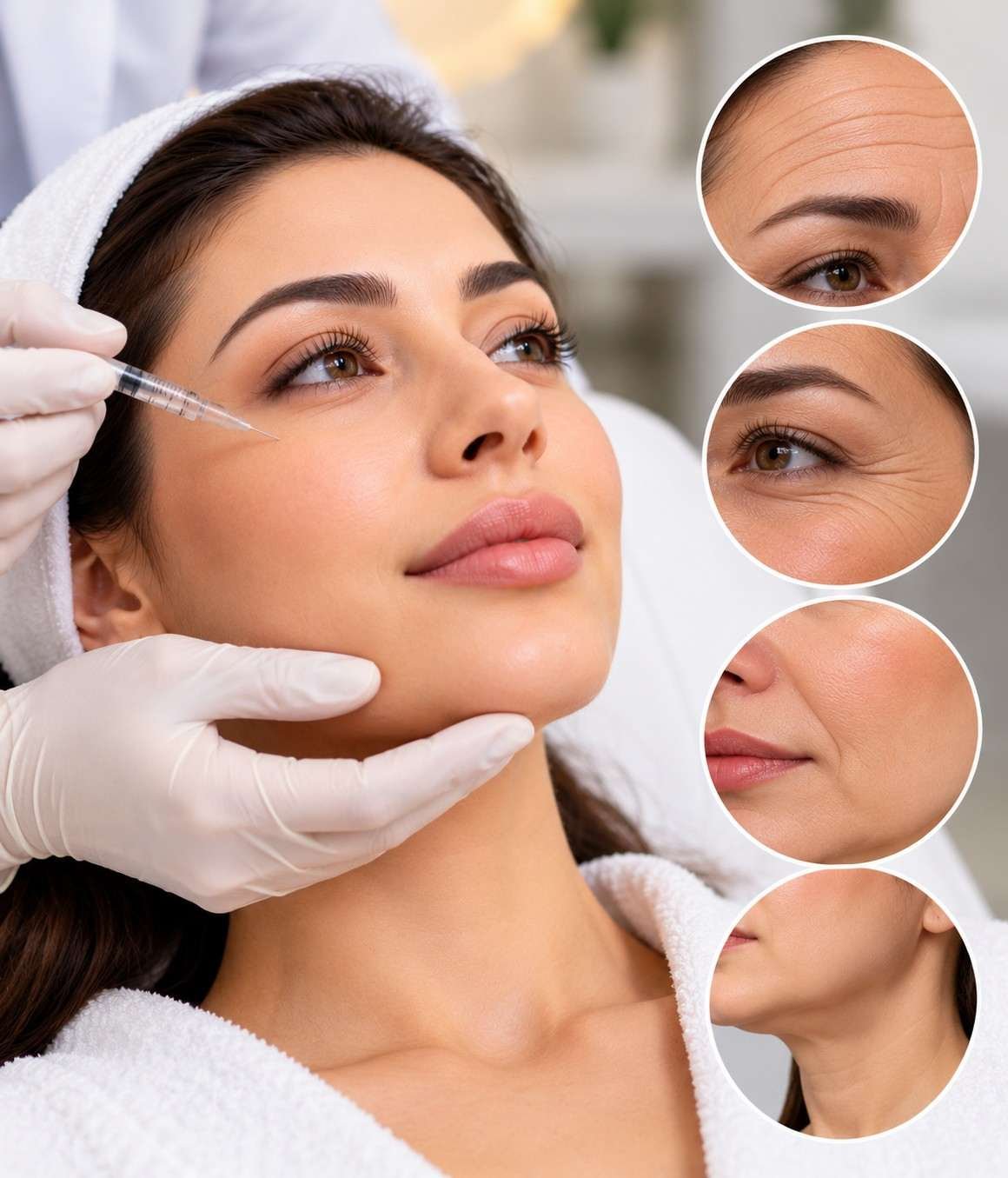
What Does Anti-Ageing Treatment Aim to Improve?
Facial ageing is several processes happening together: changes in skin texture, fine lines and wrinkles, reduced elasticity, shifts in facial volume and contour, and uneven pigmentation or sun-related change. They are not interchangeable. A treatment aimed at expression lines will not correct lost volume, and a hydrating facial will not tighten significant laxity.
Part of the reason is that different tissues change at different speeds. Collagen and elasticity in the skin decline over time, and sun exposure speeds that up. Facial fat shifts and thins in some areas, and the bone beneath changes shape. Muscles that move thousands of times a day gradually leave lines in the skin above them. Each of these needs its own kind of answer.
Ageing is not a disease, and it does not need to be eliminated. A realistic aim is to improve selected concerns while keeping your own features. Cosmetic improvement is not the same as stopping or preventing biological ageing, and natural ageing carries on after any treatment.
Which Changes Are You Hoping to Improve?
Start with what you see. Each concern points to a treatment category and to the approach that goes deeper.
Fine Lines and Expression Wrinkles
Lines caused by repeated muscle movement, such as forehead lines and crow's feet, may be considered for Botox, which acts on selected muscle activity. It tends to suit lines that appear with movement more than lines that stay when your face is relaxed.
Volume Loss & Facial Contour Shifts
Hollowing in the cheeks, or changes in chin and jaw contour, may be discussed in terms of dermal fillers, depending on anatomy and goals. Broader contour concerns are also covered on our facial contouring page.
Skin Laxity
Mild looseness, for example early softening along the jawline or cheeks, may be discussed with selected tightening approaches such as RF skin tightening. Marked looseness is a different matter and may need a different conversation.
Uneven Skin Tone and Texture
Pigmentation, roughness and surface quality call for a tailored plan. Our skin treatment page gives the overview, and laser skin resurfacing covers selected pigmentation and texture concerns.
General Skin Refresh and Hydration
For dull or dry-looking skin, a cleansing and hydration facial such as HydraFacial may be relevant. No single procedure addresses all of these equally well.
Exploring Non-Surgical Facial Rejuvenation Options
Non-surgical treatment is not one category. Choosing fewer, appropriate treatments is often more sensible than having procedures that do not match your concerns. Where more than one is appropriate, timing and sequence matter.
| Treatment Option | Primary Target Concern | Treatment Category |
|---|---|---|
| Botox | Selected dynamic expression lines | Wrinkle Relaxing |
| Dermal Fillers | Selected volume and contour concerns | Volume Restoration |
| RF Skin Tightening | Selected mild skin laxity concerns | Non-Surgical Tightening |
| Microneedling | Selected skin texture concerns | Skin Resurfacing |
| Laser Skin Treatments | Selected pigmentation, texture or resurfacing concerns | Laser Care |
| HydraFacial | Cleansing, hydration and surface dullness | Medical Facial |
| Chemical Peels | Selected superficial skin concerns | Exfoliation & Tone |
Understanding Specific Treatment Roles
How different modalities operate to address movement, volume, and skin quality safely and naturally.
Clinical Considerations for Facial Rejuvenation
Botox for Expression Lines
Botox acts on selected muscle activity and is commonly used to soften certain dynamic lines. The effect is temporary, and it does not restore lost facial volume. Suitability depends on how your face moves, your anatomy and your goals—the aim is usually to soften lines, not to stop movement. See our Botox page.
Dermal Fillers for Contour
Fillers add volume or change contour in selected areas such as cheek volume, chin/jawline contour, and selected folds. Fillers carry risks, including uncommon serious complications, needing proper medical assessment. Restraint matters: too much product can distort proportions. See our dermal fillers page.
Laxity & Skin Quality
Selected radiofrequency treatments (RF skin tightening) address tightening concerns. Microneedling, chemical peels, and laser skin resurfacing address texture. Hydration facials like HydraFacial refresh appearance, but non-surgical routes do not replace surgical lifting when marked laxity is present.
Start with a Private Conversation
Consultations are confidential and conducted one-to-one directly with your doctor to explore appropriate facial rejuvenation options with no obligation.
Who May Consider Facial Rejuvenation Treatment?
People usually ask about dynamic lines, skin texture, selected pigmentation, volume changes, mild laxity or contour changes. Suitability depends on the concern, your skin and facial characteristics, medical history, previous treatments, expectations and the risks of the treatment.
Focusing on Concerns, Not Age
A concern that is new and bothering you is a better reason to consult than a number on a birthday card. Some people come with early lines, others after many years, and either is fine.
No Fixed Age for Treatment
There is no fixed age at which treatment becomes appropriate, and younger people do not need preventive injections or procedures. Many people need nothing at all.
Suitability, Goals, Risks & Expectations
Good planning looks at your natural proportions, how your face moves when you speak and smile, your age and your individual features. It also leaves room for restraint: not treating what does not need treating, and avoiding excess volume or over-treatment.
A natural-looking result is a goal, not a guarantee. Perfect symmetry is not realistic, and no treatment is undetectable. Bring a photo of yourself from a time you liked how you looked if that helps—it is usually a better guide than someone else's face.
The right starting point is not a procedure. It is understanding what you want to improve. A consultation identifies your main concern, medical history, outcome hopes, and suitable alternatives.
- Ask what is causing the change you see.
- Ask what the risks, recovery, and alternatives look like.
- Ask how long the effect lasts and what happens if you aren't satisfied.
- Sometimes the honest answer is to wait or focus on basic skincare.
Outcomes vary because treatments address different concerns. Some have temporary effects, and improvement may develop gradually. Natural ageing continues after treatment, and no one can promise you will look a set number of years younger.
Everyday habits count as much as any procedure. Daily sun protection, a tailored skincare routine, and not smoking all influence how skin ages and how long treatment results hold.
Risks differ by procedure, including redness, irritation, bruising, swelling, pigmentation changes, asymmetry, and treatment-specific complications. Injectable treatments carry rare but serious risks.
Tell your doctor about your full medical history and current medicines. Ask who will treat you, what product or technique is used, and what the plan is if something does not go as expected.
Cost depends on the procedure selected, area treated, concern complexity, product or technology involved, and the number of sessions required. It cannot be fixed before a personal assessment.
Book a consultation at Symmetrica to discuss appropriate treatment options and their individual costs.
Frequently Asked Questions
When should I consider a consultation?
When a change bothers you and you want to understand your options, not at a particular age. A consultation does not commit you to any treatment.
How can I keep my natural facial expressions?
Tell the doctor at the start. Treatment can be planned to preserve movement, using restraint and adjusting gradually. No outcome can be guaranteed.
Do skin treatments and injectables address different issues?
Yes. Injectables such as Botox and fillers act on muscle activity and volume. Skin treatments act on surface quality, texture, tone and hydration. Many people have concerns in both groups.
How much maintenance should I expect?
It varies. Some treatments need repeating to maintain their effect, while others are done as a series. Ask what maintenance is likely for your plan before you start.
How should I discuss previous procedures?
Be open about what you had, where, when and how you felt about the result, and bring any records. It helps the doctor plan safely.
How can I prepare for an aesthetic consultation?
Note what bothers you most, list your medicines and allergies, write down your questions and, if it helps, bring photos of how you used to look. Come without heavy makeup if you can.
Should I choose skin rejuvenation or tightening?
It depends on what you see. Dull, rough or uneven skin points towards rejuvenation treatments, while looseness points towards tightening. Many people have both, and assessment helps decide where to begin.
Do I need treatment if my wrinkles are only mildly visible?
Not necessarily. Mild lines may not need treatment at all, and good skincare and sun protection may be enough. Whether to treat is your choice.
How does recovery differ between treatments?
Considerably. Injectables usually need little recovery but can cause bruising, while peels, microneedling and laser can cause redness, dryness or peeling for longer. Ask what to expect for each.
Can I have several procedures in one visit?
Sometimes, but it depends on the procedures and your skin. Timing and sequence matter, so it is decided after assessment.
How do I book a consultation?
Call Symmetrica on +91 93398 30705 or use the contact page. Tell us what you would like to discuss, and we will help you arrange a time at the clinic on Sevoke Road.