About Us
Contrary to popular belief, Lorem Ipsum is not simply random text. It has roots in a piece of classical Latin literature from 45 BC, making it over 2000 years old.
Contrary to popular belief, Lorem Ipsum is not simply random text. It has roots in a piece of classical Latin literature from 45 BC, making it over 2000 years old.
“Elective” is the key word. Nobody needs a rhinoplasty or a breast lift the way they might need an appendix removed. People choose these operations because something about their appearance bothers them, or because their body no longer matches how they feel, and they decide the change is worth the surgery, the recovery and the risk.
The reasons are varied and mostly ordinary: a feature that has always seemed out of proportion, changes after pregnancy or major weight loss, ageing that looks further along than expected, a scar that draws the eye, or chest contour in men. Cosmetic surgery can address many of these, though not all, and never perfectly.
Two people with the same wish can need different operations. Anatomy, skin quality, age, health and what you realistically hope to see all shape the plan. Expectations matter as much as technique: a surgeon can refine and improve, but cannot give you someone else’s features. That is why the useful first step is a consultation, not a procedure name.
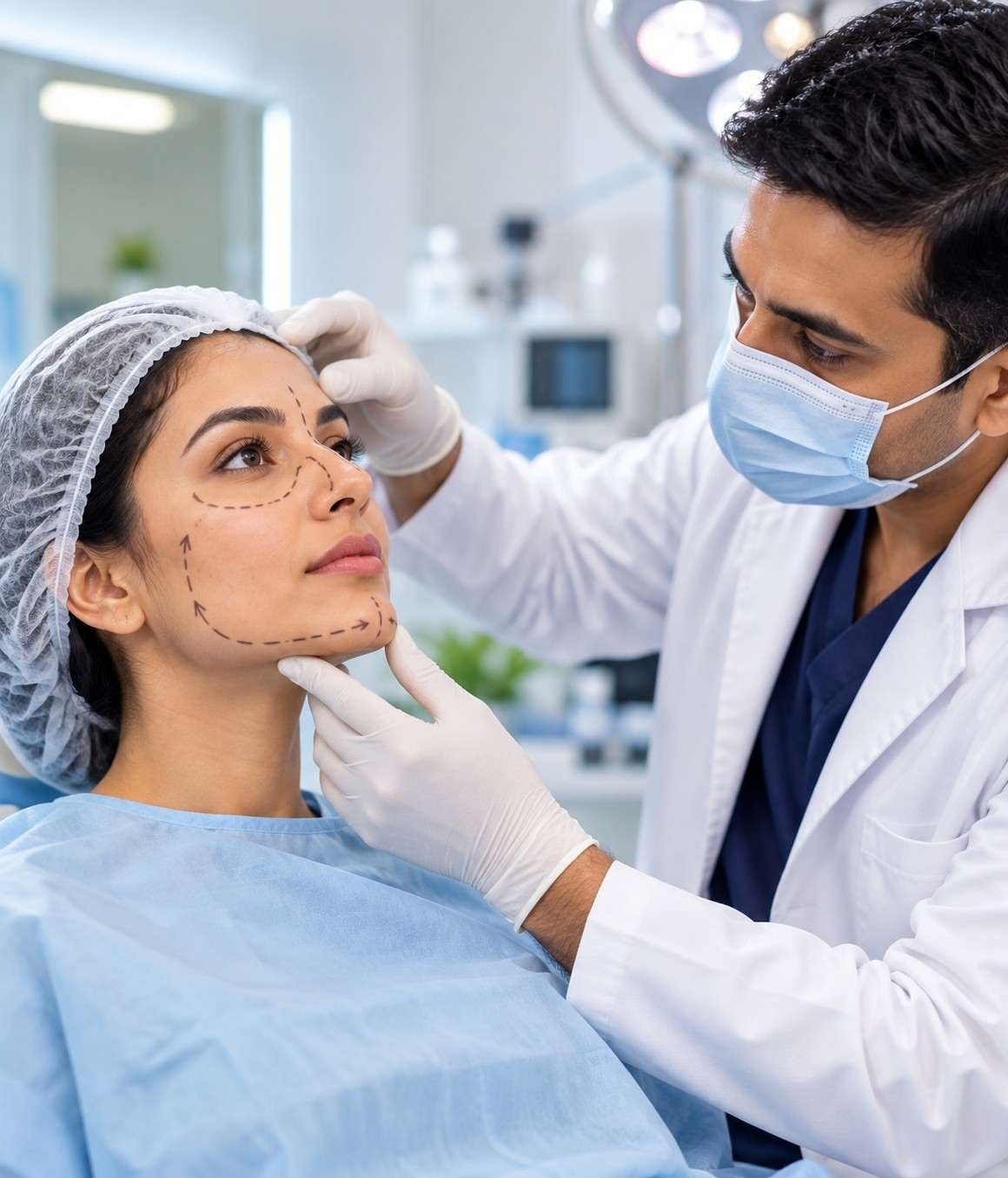
The two terms overlap, and clinics often use them loosely. Plastic surgery is the broader surgical specialty. It includes reconstructive work, which restores form and function after injury, illness or conditions present from birth, as well as cosmetic work. Cosmetic surgery, also called aesthetic surgery, is the elective part of that field: procedures chosen mainly to change or enhance appearance.
In practice one surgeon, with one body of training, may do both, and some operations serve both purposes, such as a breast reduction that relieves discomfort or a rhinoplasty that helps breathing. Neither term describes better or worse care. They describe the reason for the operation.
Five groups of procedures. Each links to a page with the detail, so the summaries here stay short.
Procedures that reshape or refine the nose, eyelids, cheeks, chin, lips and ears, or address ageing of the lower face and neck. Subtle change is usually the aim, since a small difference in one feature alters how the whole face reads.
Includes: Rhinoplasty, Facelift and neck lift, Eyelid surgery, Chin augmentation, Buccal fat pad removal, Dimpleplasty, Lip augmentation or reduction, Fat grafting
Operations that change the size, shape or position of the breasts. They answer different questions, so a patient who wants more volume, one who wants less and one who wants a lift are on different paths.
Includes: Breast augmentation, Breast reduction, Breast lift
For contour concerns that diet and exercise have not resolved, whether stubborn fat or skin left loose by pregnancy or weight loss. The choice between removing fat, removing skin and reshaping a region depends on what is actually behind the concern.
Includes: Liposuction, Tummy tuck (abdominoplasty), Arm lift, Thigh lift, Buttock contouring, High-definition contouring, Mommy makeover
Cosmetic surgery is not only chosen by women. The clearest example at Symmetrica is surgery for gynecomastia, for men troubled by enlarged breast tissue.
Includes: Gynecomastia surgery
Care for scars that stand out, whether from surgery, injury or earlier treatment. Improving a scar and removing it are different things, and what is achievable depends on the scar.
Includes: Scar revision, Keloid treatment
Most people who ask about cosmetic surgery want to look like themselves, only more rested, balanced, or in proportion. Below is an overview of the key surgical areas and how to evaluate your options.
The face is read as a whole, so changing the nose alters how the chin looks, and tightening the neck changes the jawline. Procedures divide roughly by area: the nose (rhinoplasty), the eyes (eyelid surgery), the ageing face and neck (facelift), and contour and proportion (chin augmentation, buccal fat pad removal, dimpleplasty, lip procedures, fat grafting). Detailed information can be found on our pages for rhinoplasty, facelift, eyelid surgery, and facial contouring, with an overview under head and face surgery.
Breast surgery is a bigger decision than most people expect, partly because the three common operations differ so much. Augmentation is about added volume or a different shape. Reduction takes tissue away to relieve discomfort and alter appearance. A lift repositions breasts that have lost their position without necessarily changing size. The right choice depends on your anatomy, goals, health, and expectations regarding scarring and recovery.
Body contouring covers several jobs. For stubborn fat, liposuction reshapes by removing localized deposits. For loose abdominal skin, a tummy tuck removes excess tissue and tightens underlying muscle. Individual procedures exist for arm, thigh, and buttock contouring, as well as high-definition procedures and combined options like a mommy makeover.
Men seek cosmetic surgery for many of the same reasons women do. Gynecomastia (enlarged breast tissue in men) is one of the most common reasons. Treatment depends on whether the enlargement is primarily fat, glandular tissue, or a combination of both, making a clinical assessment the essential first step.
Cosmetic scar work addresses scars left by surgery, injury, or prior treatments, including raised scars and keloids. The realistic goal is making a scar flatter, less noticeable, or better placed. Achievable results depend on the scar's type, location, age, and individual healing tendencies.
Start with the concern, not the operation. Stating “I dislike the shape of my nose” leaves room for a better answer than starting with a fixed procedure name. The right choice is shaped by your individual anatomy, tissue quality, medical history, required recovery time, and realistic goals. Be wary of any source that names your operation before examining you in person. Choosing a cosmetic surgeon involves asking about training, procedure frequency, and expecting a thorough consultation rather than a sales pitch.
The starting point is to enhance natural features rather than alter them. In practice, consultation comes first and may end without surgery. Plans are individual, and risks, recovery, and limits are explained plainly.
A consultation comes first and may end without surgery. Plans are tailored individually rather than package-based, and expectations are measured against your own anatomy rather than a photograph.
Risks, recovery, and limitations are explained plainly from the outset, including what a procedure will and will not do for you.
After surgery, follow-up matters as much as the operation. You can also read up beforehand through explainer videos and educational articles covering topics like liposuction and cosmetic surgery.
Lines on the forehead might be softened with Botox, lost volume with dermal fillers, dull or uneven skin with peels, microneedling, or HydraFacial, mild laxity with radiofrequency, and skin texture and tone with laser treatments.
Surgery changes underlying structure, usually lasts longer, and involves a greater recovery period and risk. Neither surgical nor non-surgical routes replace each other in every case; the right choice depends on clinical assessment.
Symmetrica is based in Siliguri, welcoming patients traveling for consultation and treatment from surrounding areas of North Bengal, including Matigara, Bagdogra, Jalpaiguri, Kurseong, Kalimpong, and Darjeeling.
Patients from across North Bengal are welcome to visit Symmetrica in Siliguri for a consultation to evaluate surgical and non-surgical options with no obligation to proceed.
On the face, Symmetrica offers rhinoplasty, facelift, eyelid surgery and chin augmentation; for the breasts, augmentation, reduction and lift; and for the body, liposuction, tummy tuck and other contouring, plus gynecomastia surgery for men. Each has its own page with details.
Plastic surgery is the wider specialty and includes reconstructive as well as cosmetic work. Cosmetic surgery is the elective part, chosen mainly to change or enhance appearance. One surgeon may do both, and some operations serve both purposes. The terms describe the reason for surgery, not the quality of care.
Cosmetic surgery may suit adults in good general health who have a specific concern, realistic expectations and a clear understanding of the recovery and risks. Smoking, certain medicines, unstable weight and unrealistic goals can all affect suitability. Only a clinical assessment can confirm whether surgery is appropriate for you.
Start with the concern you want solved, then let a consultation work out how. The surgeon weighs your anatomy, skin quality, health, previous surgery, recovery tolerance and expectations, and explains alternatives, including non-surgical ones. Be cautious of anyone who recommends an operation without examining you.
Every operation carries risk. Cosmetic surgery can cause bleeding, infection, scarring, problems with anaesthesia or a result you are unhappy with. Those risks fall when the surgeon is properly qualified, the patient is carefully chosen and aftercare is good, but they never reach zero. Ask what applies to your own procedure and health, and expect a straight answer before you agree to anything.
It depends on what is done. Smaller procedures may need only a few days away from usual activities, while larger ones can mean weeks of restricted activity. Swelling and bruising are normal, and the final look can take months to settle. Your surgeon sets the timeline for your operation, and the procedure pages give general guidance.
Some procedures can be combined, for example in a mommy makeover, but combining lengthens surgery and adds complexity and risk. Whether it is sensible depends on your health, the procedures involved and what can be done safely in one session. It does not necessarily shorten recovery, and your surgeon decides after assessment.
Yes, alongside surgery: Botox, dermal fillers, HydraFacial, chemical peels, microneedling, radiofrequency treatments and laser skin treatments. They suit different concerns from surgery, and a clinical assessment decides which, if either, fits you.
Yes. Symmetrica is a clinic at Diamond Plaza on Sevoke Road, Siliguri, where Dr. Amit Kr. Choudhary, a plastic surgeon, sees patients for cosmetic surgery of the face, breast and body.
Yes. Patients from surrounding parts of North Bengal who choose to travel for consultation and treatment are welcome. Surgery means follow-up visits, so mention your home town when you book and the team can plan consultation and review appointments around your travel.
To book, call +91 93398 30705, send a WhatsApp message or fill in the appointment form. Tell the team which concern or procedure you want to discuss, and bring earlier medical records if you have them. Fees and timings are confirmed at booking.