What Is a Chemical Peel?
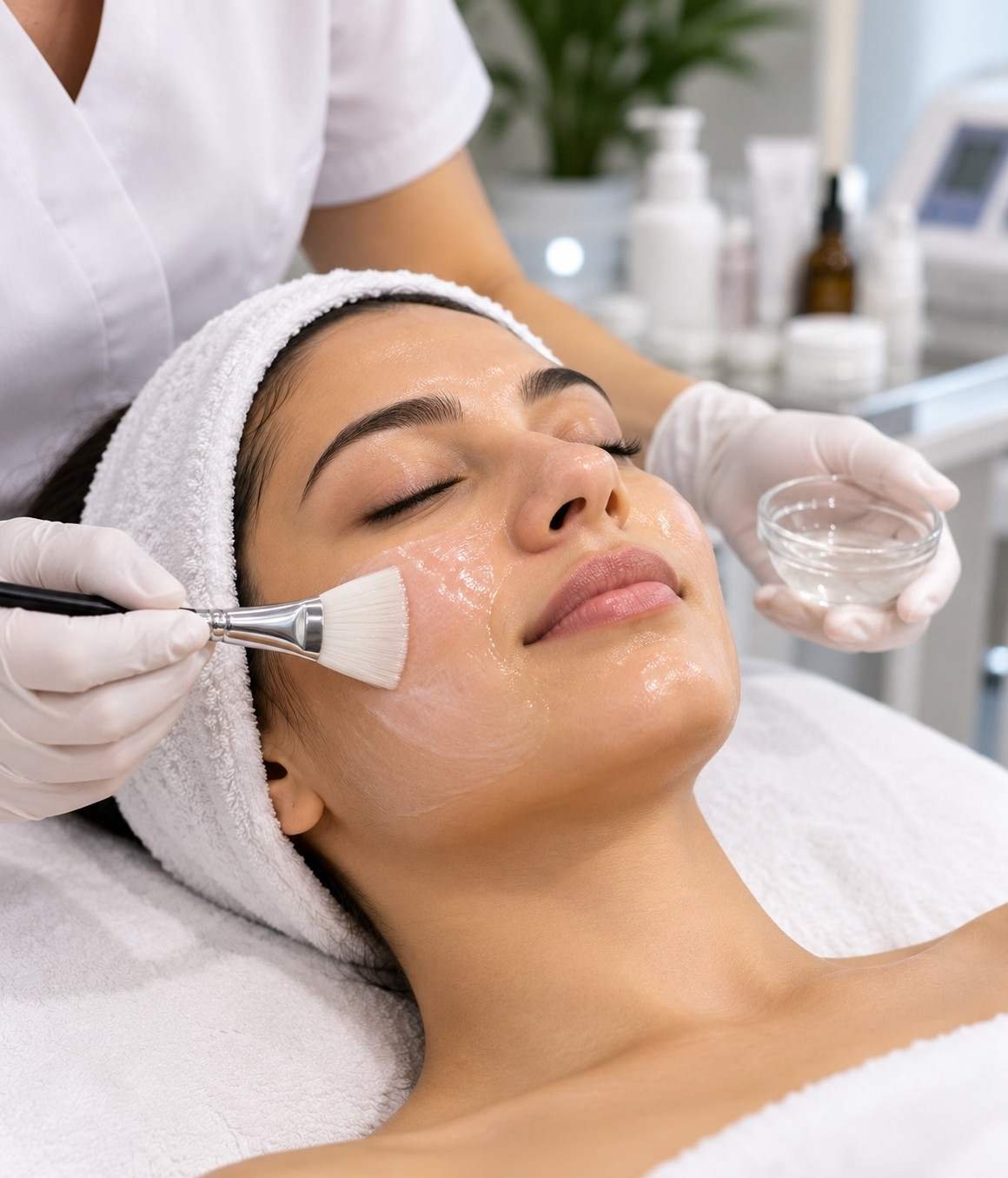
A chemical peel applies a professionally selected exfoliating agent to the skin. It loosens and removes cells from the outer layers, which encourages the surface to renew itself. That is what chemical exfoliation means. How far it works into the skin depends on the formulation and the depth chosen.
Peels vary in intensity and purpose, so the choice is made around your concern and your skin's characteristics. A gentle superficial peel and a deeper one are different treatments, with different effects, recovery and risks. We do not name peel brands or strengths here, because those are decisions for the treating professional.
A thorough clinical assessment helps determine whether a chemical peel or facial treatment is safe and appropriate for your specific skin type and goals.
Which Skin Concerns May Be Suitable?
A peel is a targeted tool for particular concerns. Below are the primary skin conditions for which chemical exfoliation is most often considered. None of these is a cure, and no peel removes a concern completely.
Uneven Skin Tone & Pigmentation
Certain superficial pigmentation concerns may be considered for peeling, depending on their cause, your skin characteristics and the plan. Not every pigmentation condition suits a peel, and some can worsen with the wrong treatment.
Acne-Related Concerns
Some peels may be considered for selected acne-prone skin or post-acne marks. Active acne and acne scarring are different concerns, and the appropriate surgical or non-surgical options differ accordingly.
Dull-Looking Skin
Selected exfoliating treatments may improve how dull surface skin looks by clearing the accumulated layer of dead cells that makes skin look flat and uneven.
Rough Surface Texture
Professionally selected exfoliation may help certain surface texture concerns by smoothing the outer epidermal layer. Significant scarring needs a different approach.
Early Signs of Skin Ageing
Some peels may be considered for superficial lines and texture changes. They do not replace treatments specifically designed for movement lines, volume loss or laxity.
Understanding Chemical Peels & Medical Facials
In general terms, chemical peels are described as superficial, medium-depth, or deeper according to how far they act. Depth shapes the purpose, expected outcome, recovery time, and risk profile.
More intensive is not automatically better. A deeper peel means more recovery time and higher potential risk, making it unsuitable for every concern or skin type. Which depth or formulation is appropriate for you is strictly decided during your clinical assessment.
A medical facial is a professionally delivered treatment tailored to selected skin concerns, combining skin assessment, deep cleansing, exfoliation, hydration, or other specialized methods. What matters most is the assessment behind it and the custom choice of approach.
They overlap, but are not identical. A chemical peel uses targeted exfoliating agents at a chosen intensity, while a medical facial combines cleansing, exfoliation, and hydration. Someone wanting minimal downtime may lean towards a facial, whereas post-acne marks may benefit more from a peel.
Selection depends on skin type, tone, active inflammation, medical history, and post-inflammatory darkening risks (common in medium to darker skin tones). Skin prone to pigmentation after irritation requires extra care in peel selection and strict sun protection.
| Treatment | Primary Mechanism | Common Target Concerns | Typical Recovery / Flaking | General Considerations |
|---|---|---|---|---|
| Chemical Peel | Exfoliating chemical agents (Superficial to Deep) | Superficial pigmentation, post-acne marks, rough texture | Mild to Moderate Flaking | Requires clinical assessment; skin tone sensitivity and sun protection are vital. |
| Medical Facial | Cleansing, mild exfoliation, nourishment, hydration | Dullness, mild congestion, overall surface maintenance | Minimal / None | Flexible, multi-step facial treatment tailored to sensitivity and hydration needs. |
| HydraFacial | Vortex-driven cleansing, extraction, and infusion | Congested pores, dryness, dull surface skin | Minimal / None | Distinct category focused on gentle extraction and immediate hydration. See our HydraFacial page. |
| Laser Treatment | Targeted light/energy technology | Deeper pigmentation, vascular concerns, scars, texture | Varies by Tech | Chosen when targeted deeper tissue intervention is required. See our laser resurfacing page. |
How Chemical Peels Are Planned
Treatment selection is a measured clinical exercise, not a guess. Your treating professional evaluates your skin characteristics, concerns, medical background, and recovery tolerance to choose the most appropriate exfoliating approach.
What to Expect at Your Skin Assessment
Concerns & Goals
You discuss your specific skin concerns, overall expectations, current skincare routine, and previous aesthetic treatments.
Medical & Skin History
Current medications, history of abnormal scarring, tendency toward post-inflammatory hyperpigmentation, and active skin conditions are thoroughly reviewed.
Clinical Evaluation
The practitioner examines skin phototype, tone, active inflammation, sensitivity, and surface texture to assess procedural safety.
Treatment Options
Suitable chemical peel depths, medical facial approaches, or alternative dermatological modalities are presented and explained clearly.
Risks & Expected Recovery
You receive detailed guidance on expected flaking, temporary redness, sun sensitivity, and key post-treatment care responsibilities.
Personalized Treatment Plan
If treatment is appropriate, a tailored peel formulation and session schedule are outlined without pressure to proceed immediately.
Start with a Private Skin Consultation
Consultations at Symmetrica are individual and focused on delivering clinical safety and appropriate treatment recommendations.
Caring for Your Skin After a Chemical Peel
Visible peeling depends on the formula and depth chosen. Some peels cause noticeable flaking, while others produce little visible peeling. More peeling does not mean better results.
Follow Professional Instructions
Strictly adhere to the specific aftercare guidelines provided by your treating practitioner tailored to your peel formulation.
Sun Protection
Protect newly exposed, delicate skin from excessive sun exposure using recommended broad-spectrum sun protection and physical coverage.
Avoid Physical Irritation
Do not pick at, scratch, or try to pull off flaking skin. Avoid harsh scrubs or active exfoliants, as picking can cause hyperpigmentation or permanent scarring.
Recommended Skincare Routine
Use only gentle, non-irritating, and hydration-focused skincare products recommended by your clinic during the active recovery window.
Report Unusual Reactions
Contact the clinic promptly if you experience unexpected symptoms, persistent severe irritation, or signs of adverse skin reaction.
Medication Guidance
There is no single aftercare schedule for everyone. Do not stop, start, or alter any prescribed skin medications without explicit clinical direction.
Results, Risks & Important History
Always inform your treating professional during consultation if you have any of the following, as they may require delaying treatment or choosing an alternative approach:
- Sensitive or highly reactive skin conditions.
- Active facial inflammation, cold sores, or skin infections.
- Recent cosmetic, laser, or aesthetic procedures on the area.
- Current prescription medications or systemic medical treatments.
- History of abnormal keloid/hypertrophic scarring or post-inflammatory pigmentation.
- Previous adverse reactions or contact allergies to skincare products.
- Any active chronic skin conditions (e.g., eczema, psoriasis, rosacea).
Results depend on peel depth, skin condition, session count, and daily sun protection. Superficial concerns improve gradually. Pigmentation can return, scars are not removed completely, and flawless results cannot be promised. Proper home maintenance sustains improvements.
Expected effects include temporary redness, dryness, and flaking. Less common risks include prolonged irritation, pigmentation changes, or rare scarring/burns if an unsuitable formula is used. While superficial peels are planned to be manageable, none are entirely risk-free.
Treatment costs depend on the specific chemical peel formulation selected, treatment depth, targeted skin concern, treated area, required number of planned sessions, and individual follow-up requirements. Pricing cannot be accurately fixed prior to a direct clinical evaluation.
Symmetrica is located on Sevoke Road in Siliguri, West Bengal. Patients from Siliguri and across North Bengal—including nearby Matigara and Bagdogra, as well as Jalpaiguri, Darjeeling, Kurseong, and Kalimpong—regularly visit for consultations on facial treatments. Because peels are often planned in a structured series, ask about session spacing beforehand.
Clinic Address: Diamond Plaza, 2.5 Mile, Sevoke Road, Near Check Post, Siliguri, West Bengal 734001.
Frequently Asked Questions
Can I have a chemical peel before an event?
Allow plenty of time. Skin can be red, dry, or flaky afterwards depending on the peel depth, so avoid scheduling a treatment immediately before an important date. Mention your timeline during your consultation so proper timing can be planned.
When can I wear makeup after a peel?
It depends on the specific peel and how your skin looks and feels afterwards. Ask the treating professional during your visit and follow their guidance on when to restart makeup and which products are safe to use.
How careful do I need to be about the sun?
Very careful. Treated skin becomes temporarily more sensitive and more prone to pigmentation changes. Follow all post-treatment sun-protection advice strictly and avoid unnecessary exposure while skin recovers.
What if my skin peels more than I expected?
Some variation in flaking is normal, but contact the clinic if it worries you, if the skin is unusually sore, or if flaking lasts longer than expected. Do not pick at, pull, or scratch flaking skin.
Is a chemical peel suitable for sensitive skin?
Sometimes, but sensitive or reactive skin requires special care. A gentler formulation may be suggested, or a different treatment altogether may suit you better. Always share details about past skin reactions.
Can peels be combined with other procedures?
Sometimes, but it must be carefully planned. Combining treatments incorrectly can increase irritation or risk if the timing is wrong, so whether and when to combine modalities is determined after assessment.
Is a chemical peel suitable for acne-prone skin?
Some peels may be considered for selected acne-prone skin or post-acne marks, but active, inflamed, or severe acne may require a different clinical approach first. Assessment decides what is appropriate.
How is the treatment choice made?
Selection is made by evaluating your main concern, skin type and sensitivity, current skin state, previous treatments, desired degree of exfoliation, and recovery tolerance. Popularity plays no role in the decision.
Can I keep using my usual skincare before and after?
Not always. Active products containing strong exfoliants or acids may need to be paused. Share your current routine with the professional and follow their explicit advice on what to pause or continue.
Do I need a consultation first, and how do I book?
Yes, a consultation is recommended so the professional can assess your skin, check suitability, explain risks, and discuss cost. To book, call Symmetrica at +91 93398 30705 or use our contact page to arrange an appointment at our Sevoke Road clinic in Siliguri.