About Us
Contrary to popular belief, Lorem Ipsum is not simply random text. It has roots in a piece of classical Latin literature from 45 BC, making it over 2000 years old.
Contrary to popular belief, Lorem Ipsum is not simply random text. It has roots in a piece of classical Latin literature from 45 BC, making it over 2000 years old.
A scar is the skin’s repair job, and repairs do not always look the way we hope. Some stay flat and fade. Others keep changing over the months that follow: they thicken, redden or darken, pull the skin tight, widen, sink below the surface or stand up above it. A scar can also itch, ache or limit how a joint moves.
What can be done depends on the scar itself: its type, its age, where it sits, how large it is, what symptoms it causes, what has been tried before and how your skin tends to heal. The aim of treatment is generally to improve how a scar looks, feels or works. It is not to promise that the scar disappears. At Symmetrica in Siliguri, plastic surgeon Dr. Amit Kr. Choudhary examines the scar first and discusses options afterwards.
Scar revision is a group of procedures that aim to improve the appearance, texture, width or position of an existing scar, or to ease a scar that is tight or uncomfortable. Sometimes that means surgery: removing the scar and closing the wound in a way that should heal better, for example along a natural skin line. Sometimes it means a simpler treatment aimed at the skin’s surface. The method depends entirely on the scar.
Revision does not return the skin to how it was before the injury or operation. The realistic aim is a scar that is less noticeable or more comfortable, not an absent one.
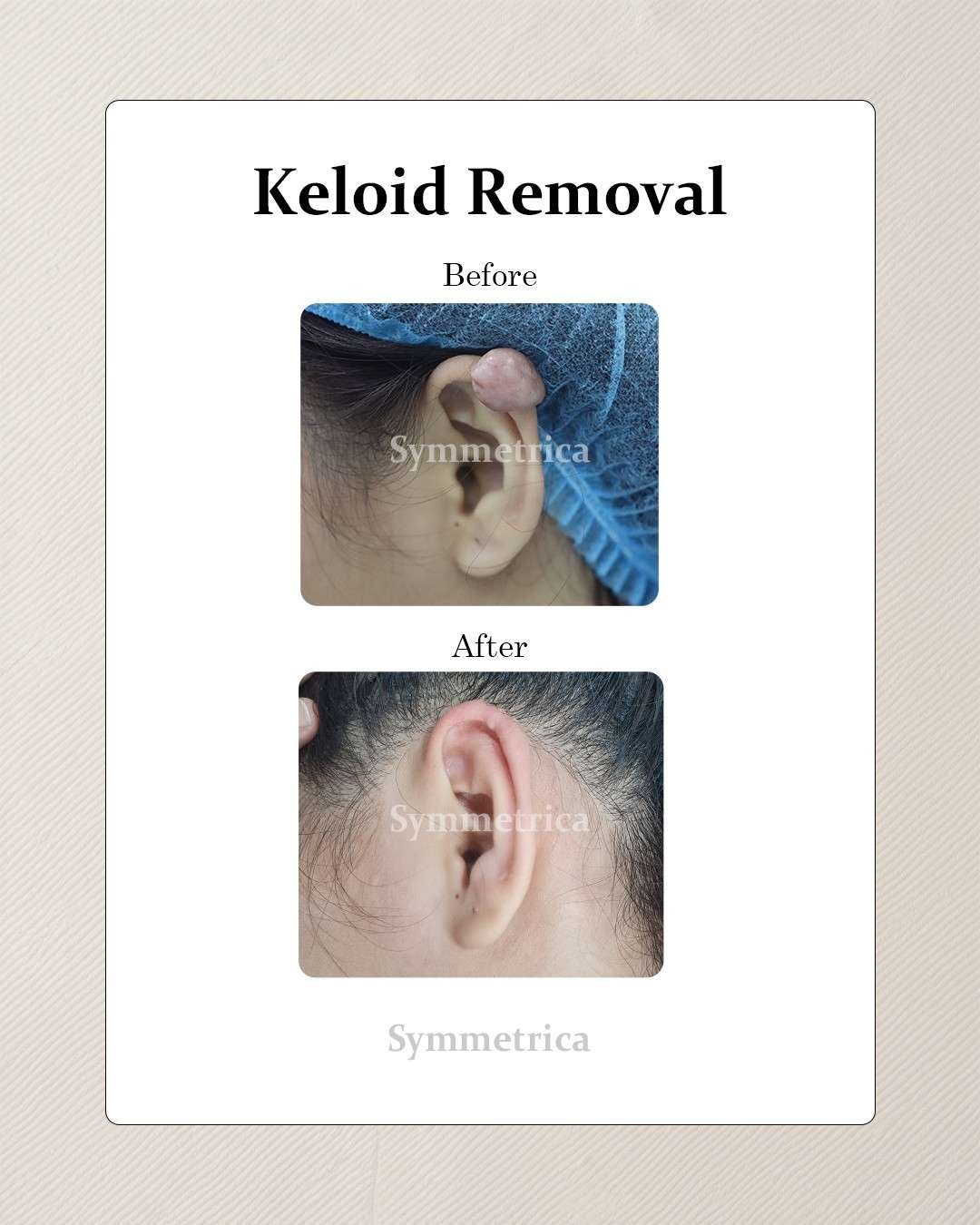
A keloid is a scar that keeps growing after the wound has healed, and grows beyond the edges of the original wound into the skin around it. It is usually raised, firm and rubbery, can be itchy or tender, and may be pink, red or darker than the surrounding skin. Keloids can follow even minor injuries, such as piercings, acne or small cuts.
Some people form them more readily than others, and a family history may play a part, but the reasons are not fully understood and nobody can predict who will develop one. What matters for treatment is that keloids have a real tendency to come back after removal, which is why they are managed differently from other raised scars.
It may be worth discussing if a scar:
Scars keep changing for many months, so surgeons often prefer to judge one once it has matured, unless it is causing problems sooner. An evaluation comes before any decision about treatment.
Both are raised scars, and they are often confused. The difference changes the treatment, so it matters. Telling them apart takes an examination and a history: where the scar sits, how it has changed and whether it extends past the wound. Getting this right matters, because a treatment that suits one can fail the other.
| Scar Type | Growth & Behavior | Recurrence & Settling Characteristics |
|---|---|---|
| Keloid Scar | Grows beyond the boundary of the original wound and can keep enlarging for months or years. | Rarely settles on its own and has a high tendency to return after simple removal. |
| Hypertrophic Scar | Raised, red and sometimes itchy, but stays strictly within the boundary of the original wound. | Often thickens in the first months, then gradually flattens and softens over a year or two. Less likely to return. |
Many kinds of scar can be assessed, and some can be improved:
That does not mean every scar needs treatment. Many are small, pale and settled, and the right advice is to leave them alone.
Treatment depends on the scar. Depending on its characteristics, options may include surgical revision; injections or other medical treatment for selected raised scars and keloids; laser-based treatment for selected surface, textural or pigment concerns; and supportive scar care, such as silicone products, protection from the sun and careful wound care. Many scars are managed with a combination, and some need nothing more than monitoring.
Not every option suits every scar, and not every clinic offers every option.
No two scars are assessed alike, so the sequence below is a guide, not a fixed protocol.
The surgeon looks at the scar’s size, width, height, colour and texture, and how it moves with the skin around it.
How the scar came about, how long ago, how it healed and how it has changed since.
Whether it is a keloid, a hypertrophic scar, a widened or depressed scar, or one that is tightening the skin, because that decides the approach.
Which options could help, which may not, and whether treatment is needed now or later.
What improvement is reasonable, what is not, and the risks, including recurrence for keloids.
What scar care and follow-up would involve, because the months after treatment matter.
Neither is better in general. Some scars need one, some the other, and some a combination.
| Feature | Scar revision (may involve surgery) | Laser scar treatment |
|---|---|---|
| What it is | Surgical or procedural revision of the scar itself | Non-surgical, energy-based treatment of the skin surface |
| Selected uses | Widened, irregular, tight or poorly placed scars; contour problems | Surface irregularity, texture and some pigment concerns |
| Limits | Leaves a new scar; not suitable for every scar | Not suitable for every scar or skin type; sessions may be repeated |
| Raised and keloid scars | Needs a plan to reduce recurrence | May need a different strategy |
| Recovery | Wound care and follow-up | Usually less recovery, though redness and pigment change can occur |
Some scars respond to laser treatment, mainly those with a surface or texture problem or a pigment change, such as certain acne scars or shallow marks. Suitability depends on the type of scar, your skin type and pigmentation, how mature the scar is and what the laser is meant to achieve. Lasers are not right for every scar, and raised or keloid scars need a different strategy. For laser care aimed at skin texture, pigmentation and acne scars, see laser skin resurfacing.
Healing varies with the procedure and the part of the body. After a surgical revision, some swelling and redness are expected, the wound needs care as instructed, and dressings and stitches are managed at follow-up visits. The scar then keeps maturing for many months: it can look redder, firmer or more noticeable before it settles, so the final appearance cannot be judged early. Follow-up matters, especially for keloids and raised scars. Because recovery depends so much on the individual and the method, your surgeon will give timelines for your own treatment.
Understanding potential risks, individual candidacy, and clinical factors ensures a well-informed approach to scar management.
Every treatment has risks, depending on the scar and method. Possibilities include infection, bleeding, problems with wound healing, and changes in skin colour (pigmentation).
Potential outcomes include a thickened or widened scar forming again, persistent or new scarring, asymmetry, or the need for further treatment.
For keloids in particular, recurrence is a real possibility, and a recurrence may sometimes be larger than the original. Many revisions heal without serious problems, but your surgeon will outline specific probabilities.
No. Suitability depends on scar type, maturity, medical history, skin type, prior treatments, and realistic expectations. Smoking and health conditions also affect healing, making an in-person consultation essential.
Cost depends on the scar’s size, location and type, the treatment method, the complexity, the number of sessions and whether surgery is needed, so no figure can be given without seeing the scar. A consultation at Symmetrica in Siliguri gives an individual assessment and treatment plan. Ask what any estimate includes.
| Approach | Primary Objective | Cost Factors in Siliguri |
|---|---|---|
| Surgical Scar Revision | Removes, repositions, or releases scar tissue for contour and tension improvement | Variable by Complexity (depends on scar length, technique, and location) |
| Medical & Laser Therapy | Improves surface texture, redness, or pigment; manages raised keloid tissue | Session-Based (tailored multi-session plans based on scar maturity) |
Cost and suitability cannot be accurately determined without an examination. Schedule a consultation for a clinical evaluation and transparent treatment estimate.
Understand your diagnosis, scar characteristics, and realistic expectations directly with our surgical and aesthetic medical team.
Scar revision is a group of procedures that aim to improve the appearance, texture, width or position of an existing scar, or to ease a scar that is tight or uncomfortable. It may involve surgery or simpler treatments, depending on the scar. It does not restore skin to how it was before the injury or operation.
A keloid is a raised, firm scar that keeps growing after the wound has healed and extends beyond the edges of the original injury. It can be itchy or tender and may be darker than the surrounding skin. Keloids have a real tendency to return after simple removal, so they are managed differently from other scars.
Both are raised scars. A hypertrophic scar stays within the boundary of the original wound and often flattens gradually over a year or two. A keloid grows beyond that boundary, rarely settles by itself and is more likely to come back after treatment. Telling them apart needs an examination, because the treatment differs.
A mature scar generally cannot be guaranteed to disappear completely. Treatment may improve its appearance, texture, contour or symptoms, depending on the type of scar, but the realistic aim is a scar that is less noticeable or more comfortable. Revision surgery itself leaves a new scar, which is intended to look better than the old one.
Yes. Keloids can recur even after treatment, which is why no responsible clinician should promise guaranteed permanent removal. The chance depends on the keloid, its location and the approach used. Planning treatment includes asking what will be done to reduce recurrence, how long follow-up will last and what happens if it returns.
Selected scars may improve with laser treatment, mainly those with a surface, texture or pigment problem, such as some acne scars. Suitability depends on scar type, skin type and how mature the scar is. Lasers are not right for every scar, and raised or keloid scars usually need a different strategy.
Surgical revision is usually done under anaesthesia, so you should not feel pain during the procedure. Afterwards some soreness, tightness and tenderness is common and is managed with medication. How much discomfort you have depends on the scar, its location and the method used, and your surgeon can explain what to expect.
It depends on the procedure and the part of the body. Wound care is usually needed for a period, and swelling and redness are expected early on. The scar itself keeps maturing for many months, so the final result cannot be judged quickly. Your surgeon will give timelines for your own treatment.
Revision may be considered when a scar has healed wide, thick, uneven or tight, when it limits movement or causes symptoms, or when it worries you, and when assessment suggests treatment could help. Scars usually need time to mature first. Many scars need no treatment, and an examination decides whether yours does.
No. Many scars are small, pale and settled, and the right advice is to leave them alone. Treatment is worth discussing if a scar is raised, wide, tight, uncomfortable or distressing. An examination, not the size of the scar alone, shows whether it is likely to benefit.
Scars keep changing for many months, often a year or more, and they can improve without treatment. Surgeons therefore usually prefer to judge a scar once it has matured, unless it is causing problems such as tightness. Your surgeon will advise on timing for your scar.