Dermal Fillers in Siliguri
Lips that look thinner than you would like. Cheeks that have lost their fullness. A jawline or chin that seems less defined than it once did, or a fold that has become more noticeable with time. Many people notice one of these and can’t quite say what has changed.
Dermal fillers are injectable treatments used for selected volume and contour concerns. They don’t suit every concern, and they work best when the plan is built around your face as a whole. At Symmetrica in Siliguri, that planning starts with a consultation, where the question is what treatment, if any, fits.
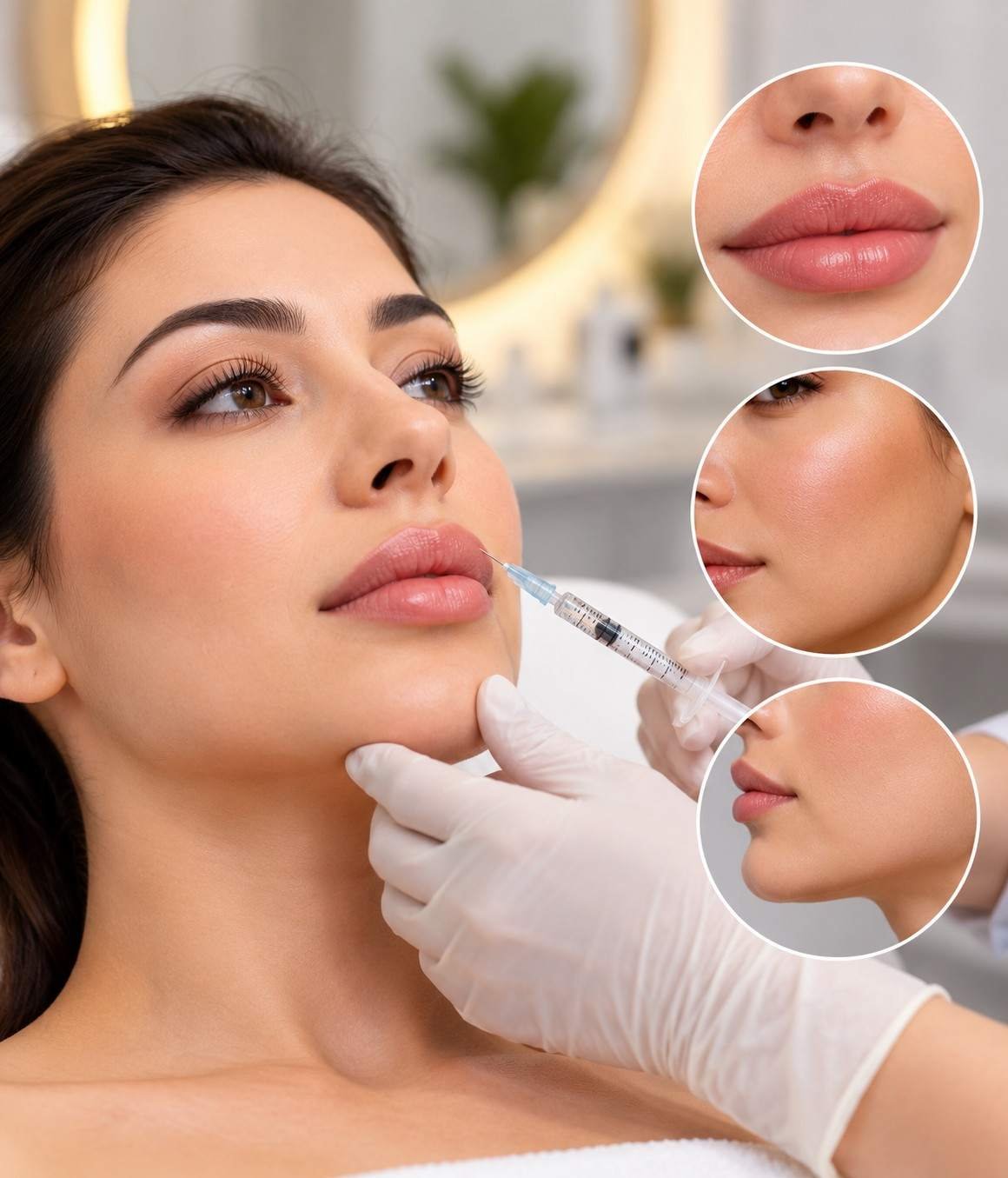
Fillers and Botox Do Different Jobs
People often ask for one when they need the other. They are different treatments for different problems, and neither is better in itself.
| Feature | Dermal Fillers | Botox |
|---|---|---|
| What it does | Adds or restores volume in selected areas; can modify contour | Reduces the activity of selected muscles |
| Typical concerns | Volume loss, lip and cheek shape, chin and jawline definition, some folds | Expression lines caused by movement, such as frown lines |
| Approach | Placed into soft tissue | Placed into specific muscles |
Some people need one, some the other, and some a combination, depending on the concern. Botox has its own page.
What Are Dermal Fillers?
Dermal fillers are injectable substances placed into selected tissues of the face. Several materials exist, and hyaluronic acid is the one commonly used in aesthetic medicine. Fillers can restore volume and help with certain contour goals. Which product, which area and how much depend on your anatomy, the characteristics of the product and what you want. Not every filler is permanent, and not every filler can be dissolved, so the type matters.
Why Is Hyaluronic Acid Commonly Used in Facial Fillers?
Hyaluronic acid is a substance the body already makes, and it binds water, which gives volume. In filler form, it can add fullness to selected areas. Some hyaluronic acid products can be broken down with an enzyme called hyaluronidase when that is clinically appropriate. “Naturally occurring” does not mean risk-free. It describes the material, not the treatment.
Where Can Dermal Fillers Be Used?
Common facial regions where fillers may be considered for structure, volume, and contour.
Lip Fillers
May add selected volume, refine proportions or soften asymmetry, while keeping natural movement.
Cheek Fillers
May restore selected volume, improve contour and support overall facial balance.
Chin Fillers
May improve projection and help the profile balance with the nose and lips.
Jawline Fillers
May add definition and contour, and in selected cases soften asymmetry.
Nasolabial Folds & Lines
May be considered in selected cases. Whether fillers help depends on what is causing the fold and on your anatomy.
Under-Eye / Tear Trough
This is a delicate area that needs careful assessment, and fillers are not appropriate for everyone. A cautious approach is part of good practice here.
Good Filler Treatment Is About Balance, Not Just More Volume
Faces are not made attractive by bigger features. Proportion and symmetry matter more, and too much filler can look unnatural, change expression or distort the face.
Good planning matches treatment to your anatomy and your aims, and it is often conservative, with changes made gradually. No treatment can promise perfect symmetry. The aim is a face that looks like yours, refreshed or refined, not a different one.
Dermal Fillers in Siliguri
Comprehensive patient guidance on treatment suitability, expected outcomes, risks, and clinical care at Symmetrica.
When Fillers May Not Be Suitable
Fillers may not be advisable if there is infection or inflammation at the site, certain medical conditions, a previous problem with fillers, expectations treatment can’t meet, pregnancy or breastfeeding, or anatomy where placement carries greater concern. This is a reason to be assessed before deciding.
Why Consultation Matters
The useful question is not “how much filler do I need?” It is “what treatment, if any, is appropriate for the concern I want to address?” A good consultation looks at what you want changed, your facial proportions, skin quality, medical history, prior treatments, and risks.
What to Expect During Treatment
You begin by discussing goals, and the clinician assesses your face at rest and in movement to agree on a plan. The area is cleaned, numbing is applied, and filler is carefully placed while checking effects. Aftercare guidance and review follow.
Comfort & Sensations
Injections cause brief discomfort for most people; lips are often more sensitive. Some products contain local anaesthetic, and topical numbing helps reduce pain. Tenderness or swelling afterwards is temporary and expected.
Timeline of Results
Some change is visible soon after treatment. However, swelling may temporarily alter the look, and the area settles over time. The true final appearance should always be judged after healing has completed.
Duration of Results
Duration depends on the filler type, area, product properties, individual metabolism, and movement in the treated region. Many hyaluronic acid fillers last months, some longer, but no universal duration applies or is permanent.
When Fillers Wear Off
The effect gradually fades, and the area drifts back toward how it looked before treatment. Fillers do not stop normal ageing, and you aren’t left worse off. Whether to repeat treatment remains your personal choice.
Common Side Effects
Swelling, redness, tenderness, bruising, and sensitivity are common and temporary. They usually settle over a few days, though individual recovery varies—lips and under-eye areas tend to swell more noticeably.
Rare & Serious Risks
Uncommon risks include infection, lumps, asymmetry, allergic reactions, tissue injury, and vascular occlusion (blocked blood vessel). Seek urgent medical care if you experience severe pain, pale/dusky skin, or vision changes.
Reversibility of Fillers
Some hyaluronic acid fillers can potentially be broken down with hyaluronidase when clinically appropriate. Not every filler can be reversed in the same way, and reversal is not always simple, so it should never be assumed automatic.
Achieving Natural Results
Natural-looking results come from conservative planning, sensible volume, respecting your facial proportions, and taking a gradual approach. No clinic can promise an completely undetectable result, but balance is key.
Dermal Fillers for Men
Men commonly ask about chin projection, jawline definition, facial balance, volume restoration, and selected lines or folds. The goal is usually a stronger, balanced profile planned around male facial structure.
Dermal Fillers for Women
Women commonly ask about lip volume, cheek contour, facial balance, selected folds, chin/jawline refinement, and volume changes from ageing. Plans follow individual facial architecture rather than trends.
Role in Facial Ageing
Ageing involves volume loss, skin quality changes, lines, and reduced elasticity. Fillers address selected volume and contour concerns, often combined with anti-ageing treatments, skin treatments, RF tightening, or Botox.
Lip Fillers in Siliguri
Lip fillers add selected volume, balance upper and lower lips, define borders, and soften asymmetry. Planning respects relation to the nose and chin while avoiding trend-led shapes. Mention any cold sore history prior.
Chin & Jawline Fillers
For a recessed chin or soft jawline, fillers add temporary projection and definition. They do not replace surgical skeletal correction; for larger or lasting structural changes, surgical facial contouring is advised.
Dermal Filler Cost Factor
There is no single price; cost depends on the treatment area, filler type, product volume, number of regions, and personal goals. Book a consultation at Symmetrica to discuss an accurate, personalized plan and cost.
Choosing a Clinic & Team
Symmetrica is doctor-led by plastic surgeon Dr. Amit Kr. Choudhary and consultant cosmetic physician Dr. Sneha Bhagat. We prioritize proper medical assessment, thorough anatomy knowledge, honest risk discussions, and follow-up.
Serving Siliguri and Patients Across North Bengal
Symmetrica is located in Siliguri, welcoming patients traveling for facial aesthetic consultations and treatment from Matigara, Bagdogra, Jalpaiguri, Darjeeling, Kurseong, and Kalimpong.
Frequently Asked Questions
How long does swelling last after lip fillers?
Swelling is common and often greatest in the first days, then settles. Lips can look uneven briefly. Contact the clinic if swelling is severe or one-sided.
Will I bruise?
Some people do, and some don’t. Bruising is usually minor and fades over days. Mention blood-thinning medicines or supplements at consultation.
Can I have fillers just before an event?
It is better to allow a couple of weeks, in case of swelling or bruising. Tell the clinician about your date when you book.
Can fillers correct facial asymmetry?
They can sometimes soften it, but they can’t make a face perfectly symmetrical. Assessment shows whether fillers suit the cause.
Will I look natural?
That is the aim, and it depends on a conservative plan and realistic expectations. No result can be guaranteed.
Do I need repeat treatments?
Because fillers are temporary, results fade, and some people return for further treatment. It is optional.
Can fillers be combined with Botox?
Yes, in some cases, since they treat different concerns. Your doctor will advise whether a combination suits you.
Are under-eye fillers right for me?
Not for everyone. The area is delicate and needs careful assessment, and some people are better treated another way.
Can jawline fillers replace surgery?
No. They provide temporary contouring. Surgery changes structure more lastingly, and the right option depends on your goals.
What should I ask at my consultation?
Ask what product is proposed, how long it lasts, whether it is reversible, what the risks are, what happens if there is a problem, and what the plan costs. Book via the appointment page or the contact page.