What Is Mesotherapy?
Mesotherapy is a term for procedures in which selected substances are injected into or just beneath the skin, usually in small amounts at several points. The substances, the way they are delivered and the reason for treatment vary by provider. One clinic may use the word for a hydration-focused skin treatment, another for a scalp treatment, another for something else entirely.
So there is no single standard mesotherapy formula, and the evidence, benefits and safety profile differ from one version to the next. A procedure sold under this name is not automatically approved, proven or suitable for every concern. The questions that matter are what is being injected, why, and what is actually known about it.
This page gives an overview of mesotherapy treatments and helps you find the right place to read more. Symmetrica is a cosmetic and aesthetic clinic in Siliguri, and a consultation here starts with your concern and your questions, not with a treatment already chosen.
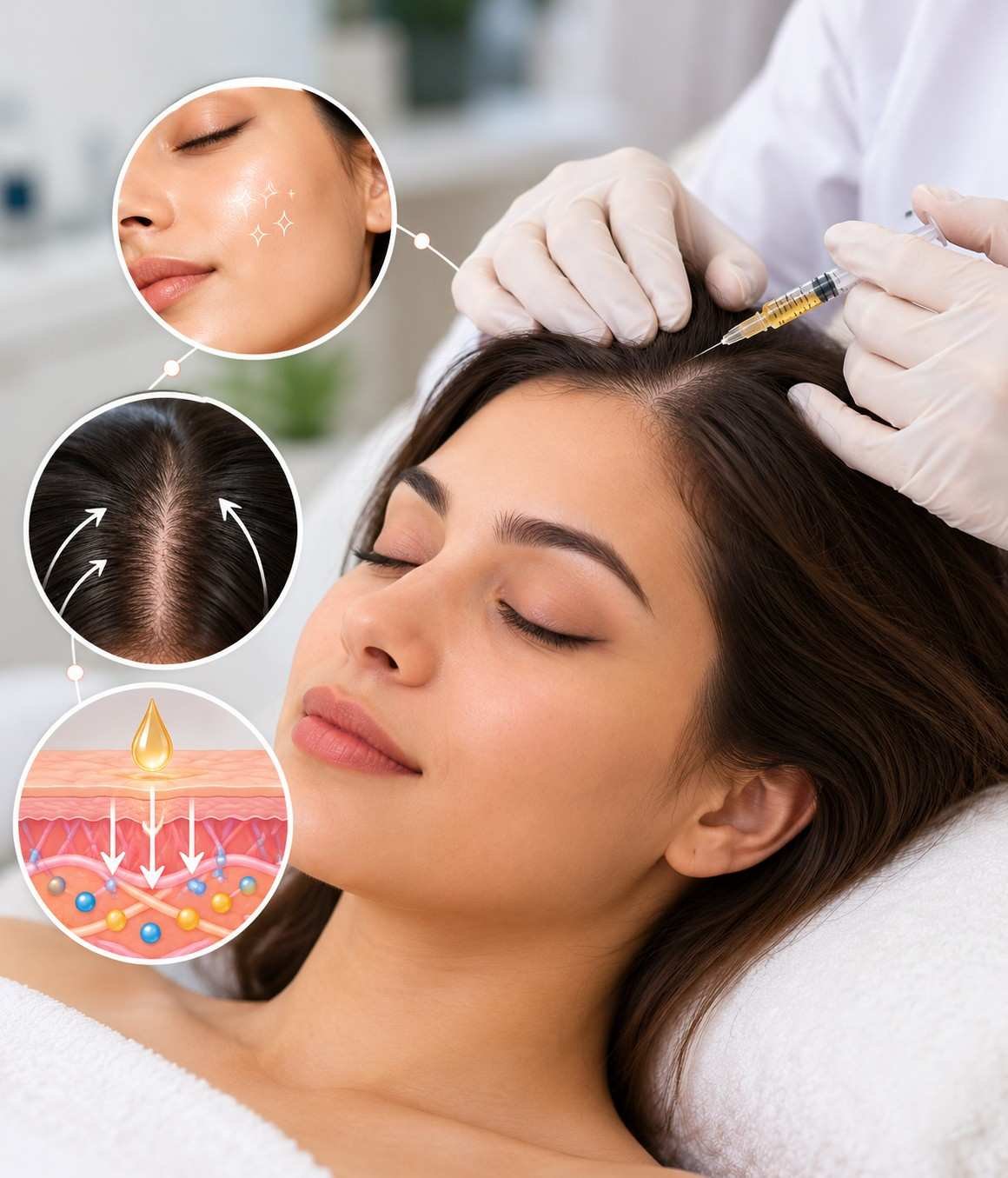
What Concerns May People Ask About?
People raise mesotherapy with a qualified practitioner for a handful of reasons:
- Skin appearance or texture
- Skin hydration or a general rejuvenation goal
- Certain hair concerns, such as thinning or hair quality
Asking about a treatment is not the same as being offered it. This list describes what people bring to consultations, not services confirmed at Symmetrica, and it does not mean mesotherapy is a proven answer to any of them. Evidence differs by the substance used, the reason for treatment, your health and the specific procedure, and for several of these uses it is limited. For some concerns, a different treatment is simply a better fit.
How Does Mesotherapy Work?
In general, a practitioner injects chosen substances into or within the skin, using fine needles or, in some techniques, a delivery device. The thinking behind each protocol is that placing a substance close to the area of concern may allow it to act locally. What it is meant to achieve depends on the formulation, its ingredients, the area treated and the clinical reasoning behind it.
Mesotherapy is therefore not one uniform treatment, and what is reported for one formulation or one indication should not be assumed for another. This page does not describe needle depth, intervals or ingredients, because those differ by protocol and should be explained to you for the specific treatment being proposed.
Mesotherapy for Skin-Related Concerns
Some people ask about mesotherapy to improve how their skin looks or feels, for example for dullness, dryness or a general rejuvenation goal. A sensible starting point is the concern itself: what you want to change, how long it has been there and what you have already tried. From there the questions are which option has reasonable support, what it risks and what outcome is realistic given your history.
Skincare, topical treatments, chemical peels, microneedling and other procedures each have different purposes and different evidence behind them, and a good discussion keeps them apart. No honest source can promise more collagen, fewer wrinkles, cleared pigmentation, a lifted look or the removal of scars from mesotherapy in general. Whether a particular procedure is supported for your concern is something to ask directly. For the wider picture, see skin treatment.
Mesotherapy for Hair-Related Concerns
People also ask about injectable treatments for hair thinning or hair quality. Hair loss, though, has many causes, and sensible treatment starts with working out which one applies. The diagnosis, the pattern of loss, your medical history, nutritional or hormonal factors and other conditions all shape what is appropriate, and some causes need medical investigation rather than a cosmetic procedure.
Mesotherapy cannot be presented as a reliable way to regrow hair, reverse genetic hair loss, prevent baldness or replace established treatments, and the evidence for scalp mesotherapy in particular is limited and mixed. It is also a different thing from PRP, which uses a preparation made from your own blood, and from hair transplant surgery, which moves hair follicles. If hair is your concern, see hair treatment, hair loss and PRP and hair transplant, bearing in mind that not every option suits every person.
Who May Be Suitable?
Suitability depends on the intended treatment, the substance involved, your health history, medicines, allergies, skin condition, the treatment area and what you expect from it. These are among the things a practitioner should weigh:
- Skin inflammation or infection in the area to be treated
- Allergies and previous reactions
- Medical conditions that may affect treatment or healing
- Medicines that may affect bleeding or healing
- Pregnancy or breastfeeding, where relevant to the proposed treatment
- A history of unusual scarring or healing problems
- The particular risks of the substance being considered
Some people will be advised to choose a different treatment, or may not be suitable for the injection procedure being proposed. There is no single eligibility rule for all mesotherapy, because the answer depends on what is injected and why.
What Happens During a Consultation?
A useful consultation is a two-way conversation. Be ready to talk about the concern you want to address, your medical and skin history, your current medicines and supplements, any allergies and earlier procedures. In return, you should hear what is being proposed, which substances would be used and why they are recommended, what benefit is realistic, what the limits are, which alternatives exist, what the risks are, how aftercare works and what follow-up to expect.
Do not hesitate to ask what is in the syringe. Understanding the substances is not a technicality; it is the basis of informed consent. And a good consultation can end with “not mesotherapy” as the answer.
Potential Benefits and Limitations
Any potential benefit depends on the formulation and the reason for treatment, so outcomes should not be generalised across all mesotherapy. Realistic expectations and informed consent are part of the process: improvement is not guaranteed, the evidence differs between applications, and a procedure may not be the most suitable option for a particular concern.
Mesotherapy is not inherently safer, more natural or more effective than other treatments, and no fixed percentage of improvement or timeline can honestly be quoted. Anyone offering one should be asked what it is based on.
Risks and Possible Side Effects
Injection procedures may cause temporary pain, redness, swelling, tenderness, bruising or irritation. Depending on the substance, the technique and the circumstances, other risks include:
- Infection
- Allergic reactions
- Changes in skin colour
- Lumps or nodules under the skin
- Tissue injury
- Other complications specific to what is injected
Risks vary substantially with the technique and with what is administered, so no single risk profile applies to every mesotherapy treatment, and it should never be described as risk-free. Before treatment, discuss the proposed formulation, the possible side effects, the aftercare and which symptoms need medical attention. Increasing pain, spreading redness, heat, pus, fever, or signs of an allergic reaction should be reported promptly, and difficulty breathing needs emergency care.
How Many Sessions Are Needed?
There is no standard number. It depends on the purpose of treatment, the formulation, the protocol chosen, how you respond and your practitioner’s clinical recommendation. Whether ongoing or maintenance treatment is needed should be discussed as part of an individual plan, along with what happens if the response is limited, so that you are not committing to an open-ended course.
Mesotherapy Compared With Other Options
These options work differently and should not be treated as interchangeable.
| Option | In general | Commonly discussed for |
|---|---|---|
| Topical skincare | Products applied to the skin’s surface | Everyday skin health and selected concerns |
| Chemical peels | Chemical exfoliation of the skin’s top layers | Selected superficial concerns, pigmentation or texture |
| Microneedling | Controlled micro-injuries that prompt the skin to repair itself | Selected texture and scar-related concerns |
| PRP | A preparation made from your own blood, injected | Discussed mainly for selected hair-related concerns |
| Mesotherapy | Injection of selected substances into or within the skin | Varies by substance and protocol; evidence differs |
No option suits everyone. The right choice depends on the nature of the concern, your skin, the risks, and your goals.
Preparation and Aftercare
Preparation depends on the specific treatment, its ingredients, your medical history and your practitioner’s advice, so follow the instructions you are given for your own treatment rather than a general guide. Afterwards, keep the treated area cared for as instructed, and avoid products or procedures that you have not discussed while it settles. Never stop a prescribed medicine on your own, and ask the clinic before changing anything. Downtime and recovery differ from one procedure to another, and no single routine applies to every version of mesotherapy.
Cost Considerations
Cost depends on the purpose of treatment, the substances used, the treatment area, the number of sessions and the individual plan, so it cannot be stated without knowing what is proposed. Contact the clinic for current service information, and ask what a quoted cost includes before you decide.
Enquiries at Symmetrica
If you are in Siliguri, or considering travelling from Matigara, Bagdogra, Jalpaiguri, Darjeeling, Kurseong, Kalimpong or elsewhere in North Bengal, you can enquire about whether a mesotherapy-related procedure is appropriate for your concern. The clinic has a single location.
Our Medical Team
Symmetrica is an aesthetic treatment clinic in Siliguri, and Dr Amit Kr. Choudhary is the doctor associated with it. This page gives general information about mesotherapy. It is not confirmation that a particular formulation or indication is offered, so ask the team what is available, what would be used and why.
How Your Treatment Plan Is Decided
A useful consultation is a two-way conversation. Be ready to talk about the concern you want to address, your medical and skin history, your current medicines and supplements, any allergies and earlier procedures.
In return, you should hear what is being proposed, which substances would be used and why they are recommended, what benefit is realistic, what the limits are, which alternatives exist, what the risks are, how aftercare works and what follow-up to expect.
Follow your practitioner’s specific instructions. In general, expect to be asked about medicines, share your full history, and follow advice regarding products or skincare routines prior to your appointment.
Keep the treated area clean and protected as advised, avoid products or procedures you have not discussed, and report any symptoms that concern you promptly to the clinic.
Frequently Asked Questions About Mesotherapy
1. What does a mesotherapy procedure actually involve?
In general, small amounts of selected substances are injected into or just beneath the skin with fine needles, at one or several points. Beyond that, the details depend on the protocol: what is injected, where, how deeply and how often. Ask for these specifics for the treatment being proposed to you.
2. Why do people ask about mesotherapy for such different things?
Because the name covers many protocols. One may be aimed at skin hydration, another at the scalp, another at something else. The purposes, supporting evidence and risks differ, so a question about skin and a question about hair are really two separate conversations.
3. Why does it matter which substances are used?
The substance determines the likely effect, the evidence behind it and the risks, including allergy and tissue reaction. You should be told what is being injected, why it is recommended for you and what is known about it. If you cannot get a clear answer, that is a reason to pause.
4. Does my medical history affect whether I can have it?
It can. Allergies, skin infection or inflammation, bleeding-related medicines, pregnancy or breastfeeding, and a tendency to scar unusually can all change the advice. Tell the practitioner about every medicine and supplement you use, and about earlier procedures and reactions.
5. What side effects should I expect, and when should I seek help?
Temporary tenderness, redness, swelling or bruising are common after injections. Spreading redness, heat, pus, fever, worsening pain or swelling, or signs of an allergic reaction need prompt medical attention, and breathing difficulty is an emergency. Ask beforehand which symptoms the clinic wants to hear about.
6. How should I prepare and what aftercare is usual?
It depends on the treatment, so follow your practitioner’s specific instructions. In general, expect to be asked about medicines, to keep the area clean and protected as advised and to avoid products or procedures you have not discussed. Never stop a prescribed medicine on your own; ask first.