What Beard & Eyebrow Transplant Means
Facial hair transplantation is a surgical procedure in which suitable hair follicles are moved from a donor area to a chosen recipient area, when that is appropriate for the person.
Beard transplantation aims to add hair to selected parts of the beard or moustache area. Eyebrow transplantation aims to restore or increase hair in selected parts of the eyebrow. They share a theme but differ in goals, planning and finish, because beard and eyebrow hair grow in different patterns and are judged by different aesthetic standards.
In both procedures, surgery redistributes follicles you already have. It does not create an unlimited supply of hair.
What Concerns Facial Hair Transplantation May Address
Identifying the cause of beard or eyebrow hair loss is essential. Changes in facial hair can be related to genetics, previous injury, scarring, hormonal factors, or underlying hair-loss conditions. A clinical assessment helps determine if a procedure is appropriate for your specific goals.
Beard Patchiness & Sparse Growth
Addresses naturally sparse beard growth, patchy areas, uneven density, or limited growth in specific areas like the cheeks, chin, or moustache.
Sparse or Thinning Eyebrows
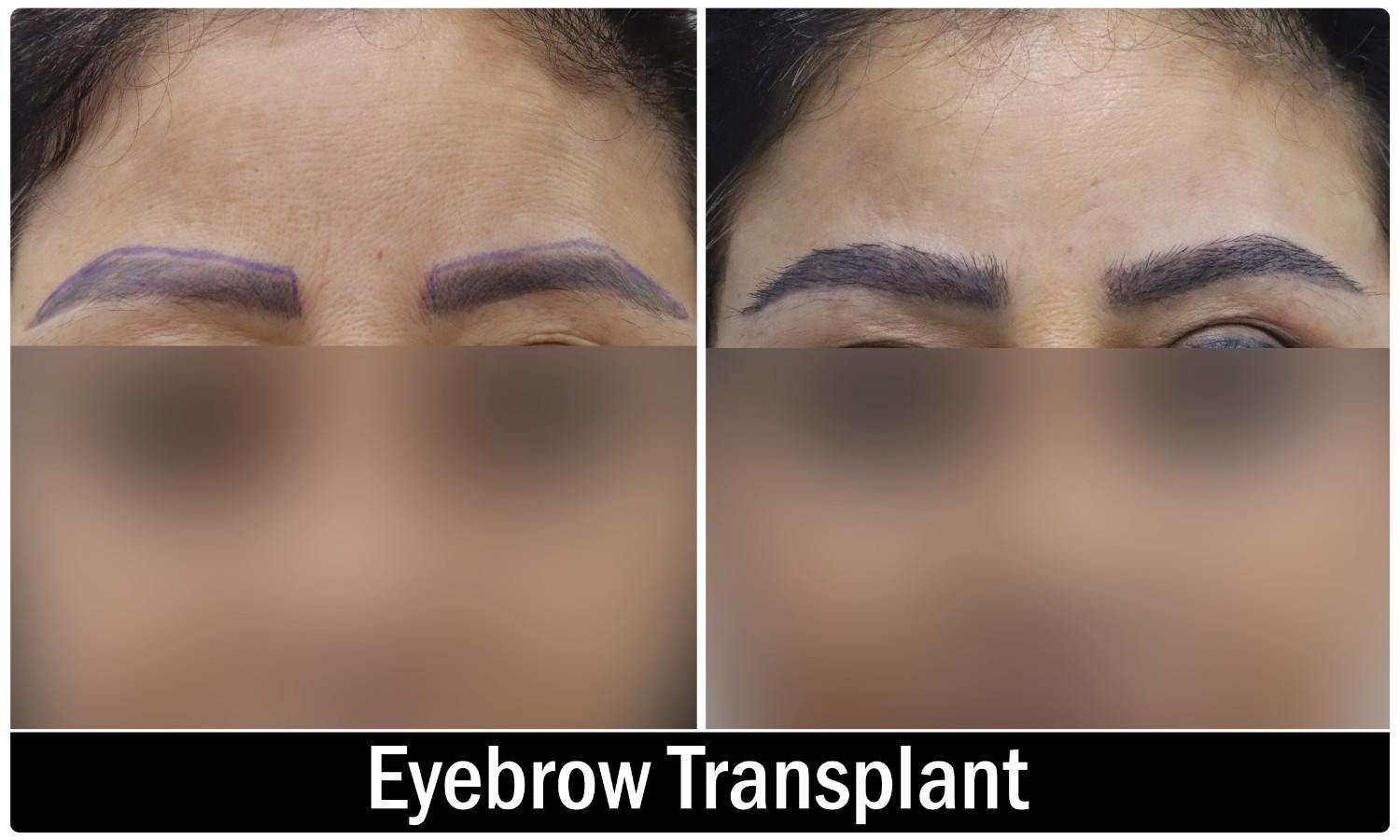
Restores or adds density to naturally sparse eyebrows or areas where eyebrow hair has thinned or been reduced over time.
Trauma & Scarring Hair Loss
Aims to restore hair coverage in selected cases where facial hair loss has occurred as a result of prior injury, trauma, or localized scarring.
* Note: Surgery is not the only option. Non-surgical alternatives such as medical treatments, cosmetic grooming, camouflage products, or scalp micropigmentation may also be evaluated depending on the underlying cause.
Beard Transplant vs Eyebrow Transplant
Neither procedure is simply easier, safer, or more successful than the other. They answer different clinical questions, and each is judged on its own custom plan.
| Consideration | Beard Transplantation | Eyebrow Transplantation |
|---|---|---|
| Purpose | Add hair to selected beard or moustache areas | Restore or increase hair in selected parts of the eyebrow |
| Recipient Area | Larger; cheeks, chin, jawline or moustache area | Small and highly visible; one or both eyebrows |
| Planning Priorities | Outline, density and blending with existing beard | Shape, spacing, density and the match with facial features |
| Hair Direction | Follows the natural pattern of facial hair, which varies by area | Needs especially careful control, as direction defines the look |
| Grooming | Growth pattern and grooming are part of the plan | Transplanted hair may need regular trimming |
| Realistic Expectations | Coverage varies; donor supply is limited | Fine detail is hard to control; no perfect symmetry can be promised |
How Facial Hair Transplantation is Planned
Planning considers donor hair availability, recipient area condition, hair loss stability, medical history, and facial harmony. Every transplant design is unique to the individual.
What Happens at a Facial Hair Transplant Consultation
Target Areas & Goals
You discuss your primary concerns, desired areas of hair restoration, and specific aesthetic goals.
Cause Identification
Reviewing the history and pattern of hair loss to identify underlying causes and determine surgical appropriateness.
Medical & Hair History
Evaluating general medical health, medications, healing tendencies, and whether hair loss is active or stable.
Donor & Recipient Check
Evaluating the donor site's graft availability alongside skin health and tissue conditions in the target zone.
Aesthetic Mapping
Planning the placement outline, density, growth direction, and natural transition with existing facial hair.
Risks & Recovery
Detailed explanation of surgical trade-offs, potential scarring, downtime, swelling, and post-op grooming needs.
Customized Plan
Setting a clear surgical strategy if suitable, or recommending appropriate medical and non-surgical alternatives.
Start with a Private Conversation
Consultations are confidential and conducted one-to-one directly with your plastic surgeon.
Recovery & Cost Considerations
Recovery and overall investment depend on the specific area treated (beard vs. eyebrow) and the number of grafts required.
Donor Area & Graft Factors
Donor hair is usually taken from an area with suitable hair density and moved to the recipient zone. Because donor supply is strictly limited, costs and procedural scope depend on graft volume.
Precision Planning & Hair Direction
Eyebrows require precise angle and spacing control as hair direction defines the look. Beard restoration focuses on natural density and outline blending across larger recipient areas.
Immediate Recovery Experience
Expect mild tenderness, swelling, localized redness, and small crusts around grafts. You will receive specific instructions regarding gentle washing, touching, and activity limits.
Ongoing Grooming & Growth
Transplanted eyebrow hair often retains its original growth characteristics and may require ongoing trimming. Beard growth patterns and maintenance will be part of your treatment plan.
Cost Factors & Enquiries
Pricing depends on recipient size, degree of sparse growth, donor graft count, surgical complexity, and follow-up care. Contact Symmetrica directly to enquire about current service availability and costs.
Suitability, Risks & Visiting Symmetrica
Having sparse facial hair does not automatically make surgery necessary. Suitability may require prior medical management or deferral due to:
- Active or progressive hair loss conditions requiring medical diagnosis.
- Inflammatory skin conditions in the donor or recipient area.
- Unstable medical history or medications affecting wound healing.
- Insufficient or unsuitable donor hair supply.
- Unrealistic expectations regarding density, symmetry, or exact reference photo matches.
Micro-incisions for graft placement and donor extraction leave tiny marks. While these typically blend over time, no transplant is completely scar-free, and visibility varies by individual.
Potential risks include discomfort, bleeding, temporary swelling, infection, sensation changes, uneven growth, or results that differ from initial expectations.
Symmetrica is located at Diamond Plaza, 2.5 Mile, Sevoke Road, Near Check Post, Siliguri, West Bengal 734001, India. Patients travel from across North Bengal, including Matigara, Bagdogra, Jalpaiguri, Darjeeling, Kurseong, and Kalimpong. If you are traveling, arrange your consultation in advance, bring any history of injury, scarring, or previous treatments, and enquire about available procedures.
Frequently Asked Questions
Can a patchy beard be treated with a transplant?
Sometimes, if the cause has been assessed and there is enough suitable donor hair. Patchiness can have medical causes, so clinical assessment comes first.
Is sparse beard growth always a medical problem?
No. For many people it is simply how their facial hair naturally grows. However, if the change is sudden, patchy, painful, or inflamed, it is worth having it clinically assessed.
Who might consider an eyebrow transplant?
People with naturally sparse eyebrows, areas of lost hair after an injury or scar, or thinning whose cause has been properly assessed. Not everyone with thin eyebrows is a candidate.
Where does the donor hair come from, and how is it placed?
Donor hair is usually taken from another area of the body that has suitable hair, and it is placed in the recipient area according to a detailed plan. Donor supply is limited, which affects what can be achieved.
Why does hair direction matter so much for eyebrows?
Eyebrow hairs lie at specific flat angles, and direction defines both shape and natural appearance. Careful planning of angle and spacing is needed, though transplanted hair can still grow differently from natural eyebrow hair.
What should I expect during recovery?
You may notice mild tenderness, swelling, redness, and small crusts, along with specific guidance on washing, touching, physical activity, and grooming. Ask for specific post-op instructions, as recovery varies.
Will it leave scars?
Scarring is a possible risk, and no transplant can be called completely scar-free. How visible any mark is depends on individual healing and the surgical approach used.
How should I think about results?
Think of results as gradual and variable. Growth takes time, some follicles may not grow as expected, and the final appearance may not match your ideal expectations exactly.
Are there options other than surgery?
Yes. Depending on the underlying cause, alternatives include medical treatments, cosmetic grooming, cosmetic filling products, and scalp or facial micropigmentation.
How do I enquire at Symmetrica in Siliguri?
Call +91 93398 30705 or use our contact form. Ask about current availability and treatment suitability, and bring any history of injury, scarring, or previous treatments to your consultation.