Gynecomastia in Men: Common Causes, Symptoms and Treatment Options
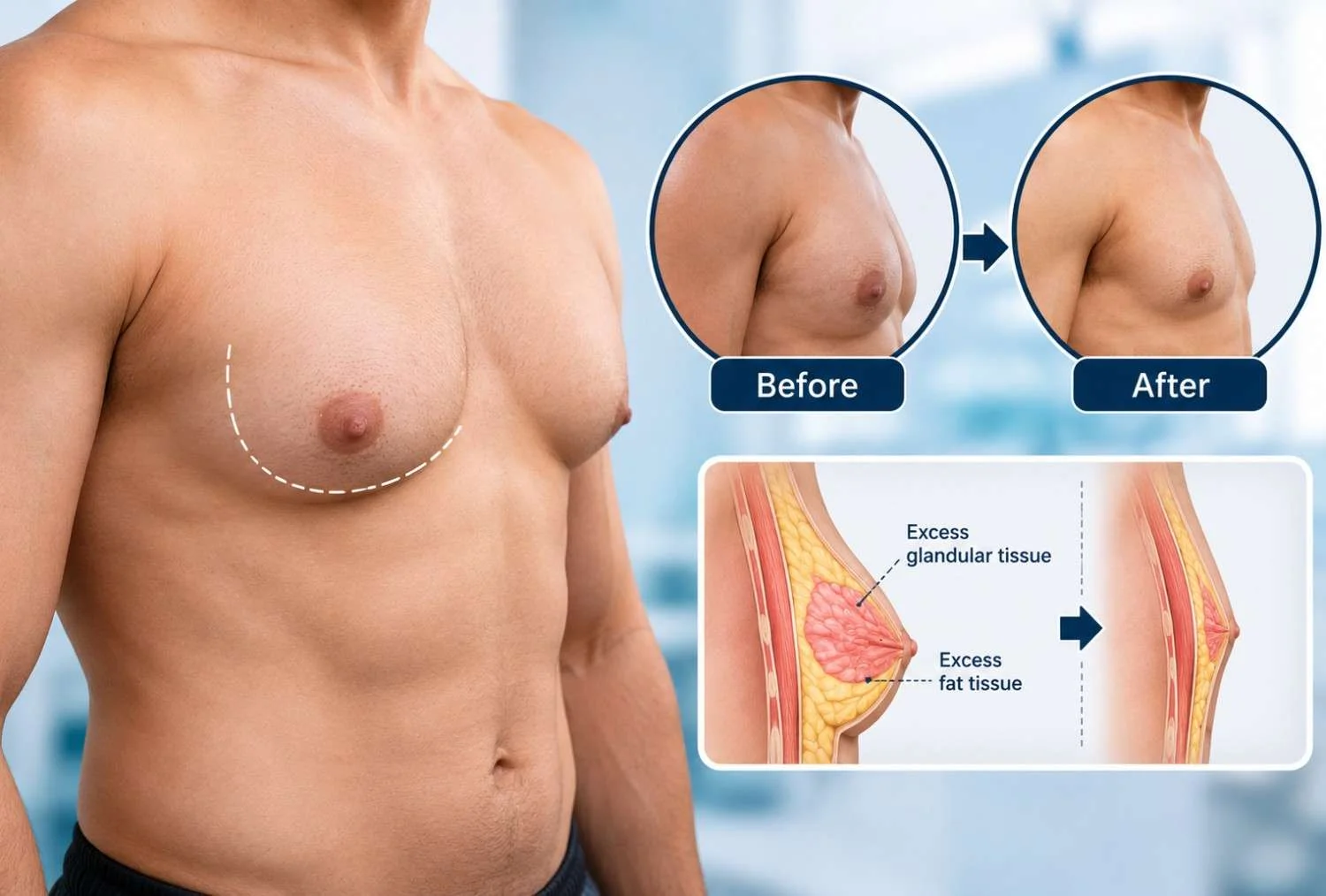
Gynecomastia is the enlargement of breast gland tissue in boys or men, usually caused by an imbalance between the hormones estrogen and testosterone. It is common, usually not serious, and often settles by itself, especially in teenagers. See a doctor if you notice pain, a firm lump, nipple discharge or enlargement on one side only. Treatment depends on the cause and ranges from observation to medicines or surgery.
This guide explains what gynecomastia is, what causes it, how it is assessed and what the treatment options are. It is general information and not a diagnosis.
What Is Gynecomastia?
Gynecomastia is an increase in the amount of breast gland tissue. It can affect one or both sides, sometimes unevenly. (Mayo Clinic) Typically, a firm or rubbery disc can be felt beneath the nipple. It is not a sign of weakness, and many men have it for years without telling anyone.
A chest can look enlarged for different reasons, and the difference matters for treatment
Condition | What It Is | Typical Feel |
|---|---|---|
Gynecomastia | Growth of breast gland tissue | Firm or rubbery, often behind the nipple |
Pseudogynecomastia | Extra fat in the chest, without gland growth | Softer, spread evenly across the chest |
Other conditions | Conditions such as a lipoma, mastitis or, rarely, male breast cancer | Varies; a firm lump or one-sided change needs prompt examination |
Many men have a mixture of the two. Only an examination, and sometimes imaging, can tell which applies to you.
Symptoms of Gynecomastia
Common symptoms of gynecomastia include
Swollen breast tissue on one or both sides
Tender or painful breasts, which is more common in teenagers
Nipples that are sensitive when they rub against clothing
A rounded or fuller chest contour, with a firm area behind the nipple
Mayo Clinic notes that most adults with gynecomastia have no symptoms apart from the change in appearance. It can still be hard to cope with, and the emotional effect should not be dismissed.
Common Causes of Gynecomastia
The underlying reason is usually that testosterone has dropped relative to estrogen, or that breast tissue is reacting differently to these hormones. Common triggers include
Natural hormone changes: More than half of male babies are born with enlarged breasts, which settle within weeks. During puberty, it is fairly common and usually goes away within about 6 months to 2 years. Among men aged 50 to 80, Mayo Clinic reports that roughly 24% to 65% develop it
Medicines: These include certain prostate medicines, anabolic steroids, some HIV, anti-anxiety, antidepressant, heart and ulcer medicines, and chemotherapy. Never stop a prescribed medicine on your own. Ask your doctor
Alcohol and drugs: Alcohol, anabolic steroids, amphetamines, marijuana, heroin and methadone are all linked with gynecomastia. Muscle-building products and supplements are worth mentioning to your doctor
Health conditions: Low testosterone, an overactive thyroid, kidney or liver disease, malnutrition and some tumours can affect hormone balance
Weight and ageing: Being overweight can contribute, and hormone changes with age can too
Some herbal products: Mayo Clinic notes that some plant oils, such as tea tree or lavender oil in shampoos and lotions, have been associated with gynecomastia
In many men, no clear cause is found. That does not make the condition less real, and it does not mean treatment is unavailable.
When to See a Doctor
Mayo Clinic advises seeing a health care professional if you have swelling, pain or tenderness, fluid coming from one or both nipples, a firm or hard lump, or dimpled skin on the breast. Breast cancer is uncommon in men, but it can happen. Enlargement of one breast or a firm lump raises concern and needs a prompt examination.
Also get checked if the enlargement came on quickly, is getting worse, or began after starting a new medicine or supplement. A checkup is often reassuring, since many men worry that something serious is behind it.
How Is Gynecomastia Diagnosed?
The doctor asks about your symptoms and the medicines you take, and examines your breast tissue, abdomen and genitals. Depending on what is found, tests may include blood tests and imaging such as a mammogram or ultrasound.
Other conditions can look similar, including fatty chest tissue, breast cancer, mastitis and lipoma, which is why examination matters.
Gynecomastia Treatment Options
1. Observation
Gynecomastia often goes away over time without treatment. In teenagers, Mayo Clinic says checkups every 3 to 6 months may be advised to see whether it improves by itself, and it often settles in under two years.
2. Treating the Cause
If a medicine, substance or medical condition is responsible, dealing with it may help. A doctor may stop or change a medicine. Some men are referred to a physician or endocrinologist for a hormone check before any cosmetic option is considered.
3. Medicines
Medicines such as tamoxifen, raloxifene or aromatase inhibitors may help some adults. Mayo Clinic notes that, in the United States, they are not approved specifically for gynecomastia.
They are prescribed only after specialist assessment, and they have side effects.
4. Surgery
If you still have enlarged breast tissue after waiting or after medicine, and it bothers you, surgery may be an option. The main approaches are
Liposuction: Removes fat but not the gland tissue itself
Gland removal (mastectomy): Removes the breast gland tissue, sometimes through a small incision along the edge of the areola
A combination: Many men need this approach when both fat and gland tissue are involved
Skin reduction: In some cases with a lot of tissue or loose skin, skin reduction may be needed, which means longer scars
Surgery carries risks, including bleeding, fluid collection (seroma), infection, uneven contours, changes in nipple sensation, visible scars and the possibility that tissue returns if weight or the underlying cause changes.
Results vary, and the final contour takes months to settle. Whether surgery suits you is decided only after assessment. At Symmetrica, you can read about the clinic’s approach on its gynecomastia surgery page.
Can Exercise or Weight Loss Get Rid of Gynecomastia?
It depends on what the enlargement is made of. Weight loss can reduce excess fat in the chest. Firm glandular tissue, however, is unlikely to disappear with exercise or weight loss alone, as the clinic’s page explains, so chest workouts will not remove it.
If your weight is changing, it is usually sensible to let it settle before considering surgery.
Coping with the Emotional Side
Gynecomastia can be stressful and embarrassing. It can make swimming or changing in a locker room difficult, and for some men, it affects relationships.
Mayo Clinic suggests getting a checkup, talking to family or friends, and considering counselling if it is affecting your mood. You are not alone, and it is a recognised medical condition.
What to Expect at a Consultation at Symmetrica
At Symmetrica in Siliguri, the clinic says plastic surgeon Dr. Amit Kr. Choudhary begins with a private consultation to find the cause and decide whether surgery is sensible.
The visit typically covers
When you first noticed the change and whether it is stable or growing
Your medicines, supplements, steroid use, weight history, alcohol and family history
An examination of the chest and a decision on whether blood tests or imaging are needed
A referral to a physician or endocrinologist first, if a hormonal or medical cause is suspected
All suitable options, including observation, lifestyle changes and surgery, with their limits and risks and no pressure to decide
Frequently Asked Questions
What Causes Gynecomastia in Men?
Usually, a shift in the balance between estrogen and testosterone. Puberty, ageing, medicines, steroids, alcohol, weight gain and some medical conditions can cause it, and sometimes no cause is found.
Does Gynecomastia Go Away on Its Own?
Often, especially in teenagers, where it commonly settles within about two years. In adults, long-standing glandular tissue is less likely to resolve without treatment.
Is Gynecomastia a Sign of Cancer?
Usually not. Male breast cancer is uncommon, but a firm lump, enlargement of one breast only, nipple discharge or dimpled skin should be examined promptly.
How Can I Tell Gynecomastia from Chest Fat?
Glandular tissue tends to feel firm and sits behind the nipple, while fat is softer and more evenly spread. Only an examination can confirm which you have, or whether it is both.
Can Medicines Treat Gynecomastia?
Some medicines may help certain adults, but they are not specifically approved for gynecomastia in the United States and need specialist assessment. Stopping a medicine that is the cause may also help, but only under a doctor’s advice.
When Is Surgery Considered?
Usually when the enlargement persists, any underlying cause has been assessed and managed, and the person is bothered by appearance or tenderness. Teenagers are usually observed first.