Early Signs of Hair Thinning: When Should You Consult a Specialist?
See a specialist when your hair is changing in a way that keeps going and has no clear explanation: a hairline that is moving back, a parting that looks wider, more scalp showing, shedding that stays heavy for weeks, patchy loss, or a scalp that itches, burns or hurts. Losing 50 to 100 hairs a day is normal. A visible change in how your hair looks is not, and treatment tends to work best when it starts early.
This guide explains the early signs, what can cause them, and how to decide whether it is time to book an assessment. It is general information, not a diagnosis.
What Is Normal Hair Shedding?
Hair grows in cycles, so some of it falls out every day. The American Academy of Dermatology (AAD) says it is normal to lose between 50 and 100 hairs a day, and that this shedding is not a sign of hair loss. (AAD) You may notice hair in the shower drain, on your comb or on your pillow, and long hair always looks like more than it is.
A more useful question than “how many hairs?” is “is this different from my normal?” Hair loss that is new, heavier than usual, or is changing how your hair looks deserves attention. The AAD lists a receding hairline, a bald spot or overall thinning as signs of hair loss.
Early Signs of Hair Thinning to Watch For
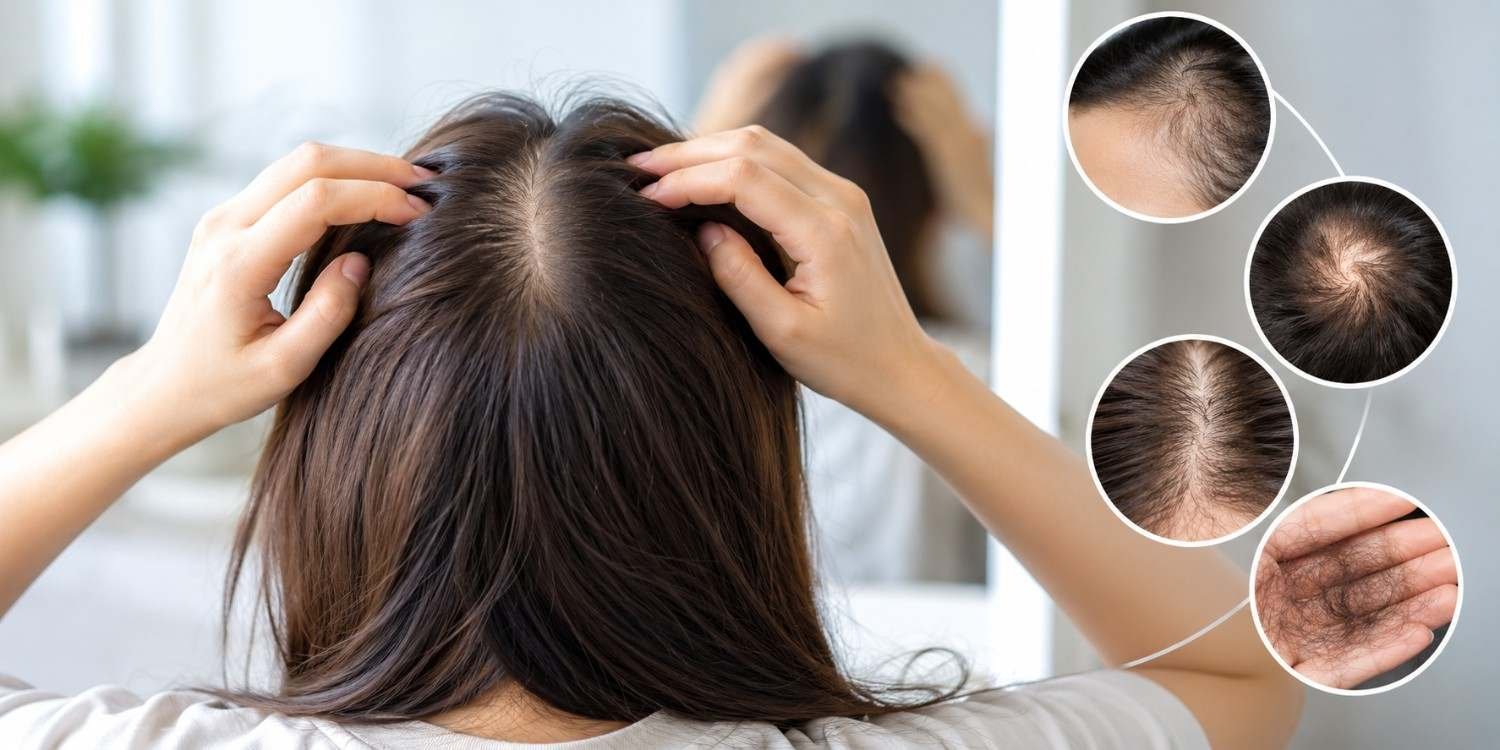
A receding hairline or thinning temples. In men, the hairline often moves back at the temples first.
A widening parting. In women, thinning commonly shows as a broader central parting and less overall density, rather than a receding hairline.
More scalp visible, especially at the crown or when light falls on your head.
Finer, softer hairs, or a ponytail that feels thinner than before.
Shedding that stays heavy for several weeks, with noticeably more hair on the pillow, brush or bathroom floor.
Patches of hair loss, or hair coming out in clumps.
Scalp symptoms such as itching, soreness, redness, scaling or tenderness around the thinning area.
Many of these start quietly. A simple habit helps: take a photo of your parting, hairline and crown once a month, in the same light. Changes are much easier to see in photographs than in a mirror.
Shedding or Thinning? Why the Difference Matters
People use “hair fall” for several different problems. They have different causes and call for different responses.
| Pattern | What it often looks like | What to do |
|---|---|---|
| Temporary shedding | More hair than usual on pillow, brush or drain, often a couple of months after illness, stress or a big change; thinning is usually all over rather than at the hairline | Get assessed if it lasts more than a few weeks; causes can often be found and corrected |
| Pattern thinning | Gradual change at the temples, hairline, crown or parting; hair gets finer over time | Assess early to confirm the cause and discuss options |
| Patchy loss or scalp symptoms | Bare patches, clumps, redness, scaling, pain or soreness | See a doctor promptly |
These are broad patterns, not a way to diagnose yourself. Other causes can look similar, which is why the pattern and history matter more than any single sign.
Common Causes of Hair Thinning
Hereditary (pattern) hair loss. The most common cause of long-term thinning. It follows a recognisable pattern and tends to progress slowly.
Temporary shedding. Illness with high fever, major stress, childbirth, surgery, rapid weight loss or crash dieting, and iron or thyroid problems can push more hairs into the resting phase. Harvard Health notes that most cases are diagnosed from history and a scalp examination, and that blood tests may check for thyroid problems. It adds that this type of shedding rarely lasts more than six months, though some cases last longer. (Harvard Health)
Hair care and styling. The AAD notes that hair care or too-tight hairstyles can cause hair loss. Breakage from heat, chemicals and rough handling can also be mistaken for thinning.
Scalp conditions. Infection or inflammation of the scalp can affect hair and may need specific treatment.
Medicines and other medical conditions, some of which need attention in their own right.
The AAD stresses that the key to getting results is knowing the true cause of the hair loss.
When Should You Consult a Specialist?
Consider booking an assessment if any of these apply:
Your hairline is receding, your parting is widening or your crown is thinning, and it has continued for a few months.
Your shedding is clearly more than your normal and has not settled after a few weeks.
You have patchy hair loss, or sudden, heavy loss.
Your scalp itches, burns, hurts, flakes heavily or looks inflamed.
Hair loss comes with other symptoms such as unusual tiredness, weight change or changes in your periods.
Hair loss began young, or runs in your family, and you want to understand your options early.
You have tried products for some time without a clear improvement, or you are unsure what is causing the problem.
Sudden patchy hair loss, significant scalp inflammation or hair loss together with other worrying symptoms should be seen promptly. This is not a reason for alarm. It is a reason not to guess. Waiting also has a cost, since the AAD notes that treatment for hair loss tends to be most effective when started early.
Which Specialist Should You See?
A dermatologist or a trichologist, a specialist in hair and scalp conditions, is the usual starting point for thinning. A doctor who treats hair loss will first work out the cause. Surgery is only one option, and many people do not need it.
At Symmetrica in Siliguri, the clinic says Dr. Sneha Bhagat, consultant cosmetic physician and trichologist, sees skin, hair and non-surgical concerns, and Dr. Amit Kr. Choudhary, plastic surgeon, sees surgical concerns. If you are not sure who to see, the team will direct you.
What Happens at a Hair Thinning Consultation?
It starts with talking. The doctor asks when the thinning began, how it has changed, what you have tried, your general health, medicines and family history, then examines your hair and scalp. Depending on what is found, the doctor may advise tests. For example, blood tests are sometimes used to look for thyroid problems or iron deficiency.
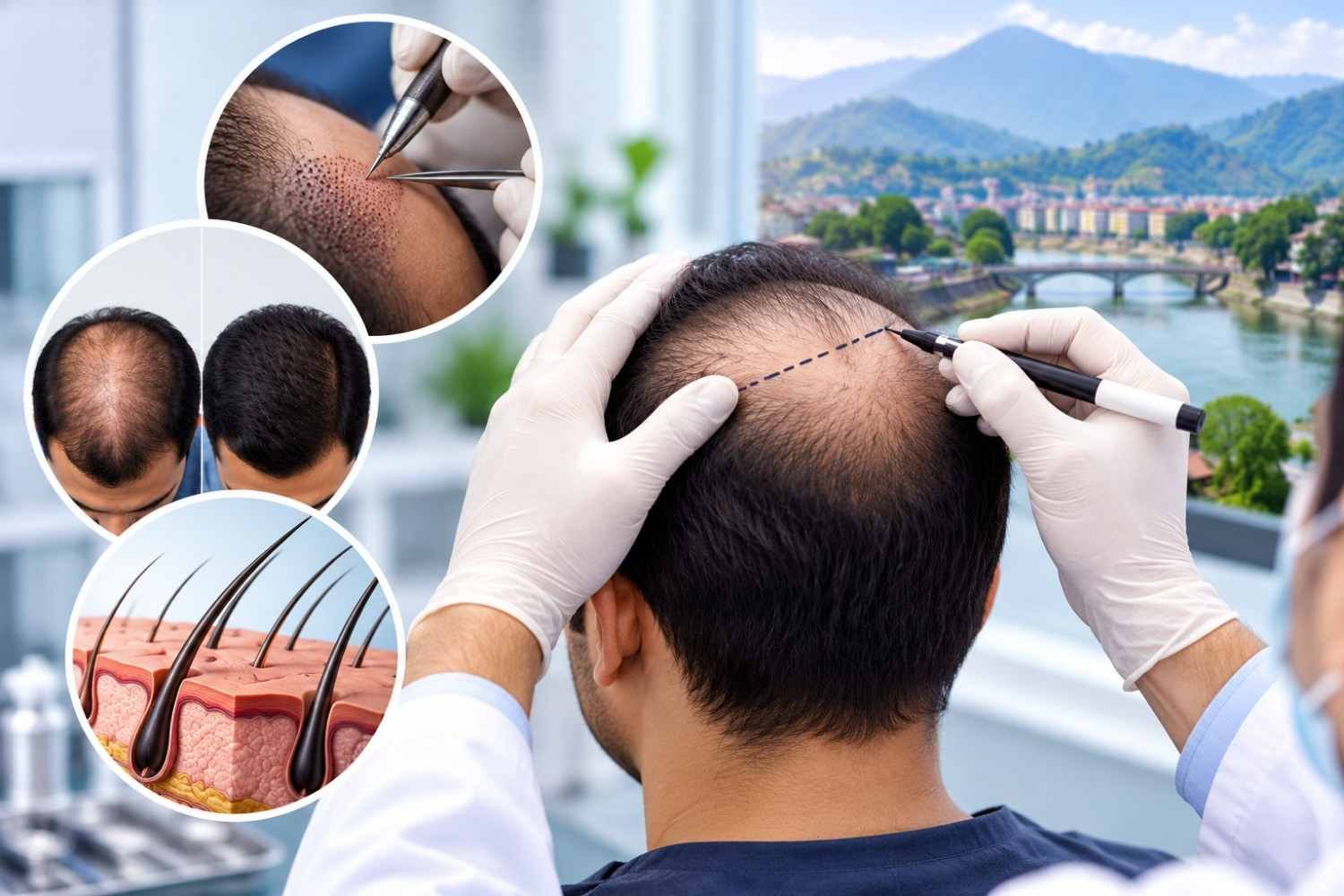
From there, the plan follows the cause. It may include treating an underlying condition, medical management, a non-surgical option such as PRP in selected patients, or a discussion of a transplant only where it is suitable. You can read more about each on the clinic’s pages for hair loss and PRP and hair transplant. No treatment can promise a particular result, and response varies from person to person.
What You Can Do While You Decide
Keep monthly photos and note when the changes began.
Handle your hair gently and avoid very tight styles that pull on the roots.
Note recent illness, stress, weight change, new medicines or childbirth, since these help the doctor.
Avoid starting supplements or strong treatments on a guess. The right one depends on the cause.
Bring earlier reports, a list of your medicines and allergies, and your questions to the first visit.
Frequently Asked Questions
Is losing 100 hairs a day normal?
Between 50 and 100 hairs a day is the usual figure given by the AAD. A few more on a wash day need not worry you. A sustained, noticeable increase or visible thinning does.
Can stress cause hair thinning?
Major stress, illness and other physical shocks can trigger temporary shedding, often a few months after the event. It usually settles, but because other causes can look similar, persistent shedding should be assessed.
Is early hair thinning reversible?
It depends on the cause. Temporary shedding often recovers once the trigger is dealt with. Hereditary thinning cannot be cured, but the AAD notes that treatment such as minoxidil can help some people, and that starting early tends to work best. Results vary.
Do I need a hair transplant if my hair is thinning?
Not necessarily. A transplant moves existing hair and suits selected patients with enough donor hair. Many people first need a diagnosis and non-surgical management.
Is a receding hairline in your twenties a reason to see a doctor?
It can be. Early assessment tells you whether it fits a pattern and what your options are, long before decisions become urgent.
Do women need to see a specialist for a widening parting?
A widening parting or overall thinning in women has several possible causes, including hormonal, nutritional and medical ones. A medical assessment helps separate them.