About Us
Contrary to popular belief, Lorem Ipsum is not simply random text. It has roots in a piece of classical Latin literature from 45 BC, making it over 2000 years old.
Contrary to popular belief, Lorem Ipsum is not simply random text. It has roots in a piece of classical Latin literature from 45 BC, making it over 2000 years old.
A tummy tuck, or abdominoplasty, is a surgical body-contouring procedure that removes excess skin, and often some fat, from the abdomen, and may tighten the abdominal wall muscles.
It is considered for loose skin that does not respond to diet or exercise, such as after pregnancy or major weight loss. Suitability depends on your anatomy and overall health and is decided after a full assessment.
A tummy tuck is not a weight-loss procedure, and it is not a substitute for weight management. It reshapes the abdomen as it is by addressing excess skin, localized fat, and muscle laxity.
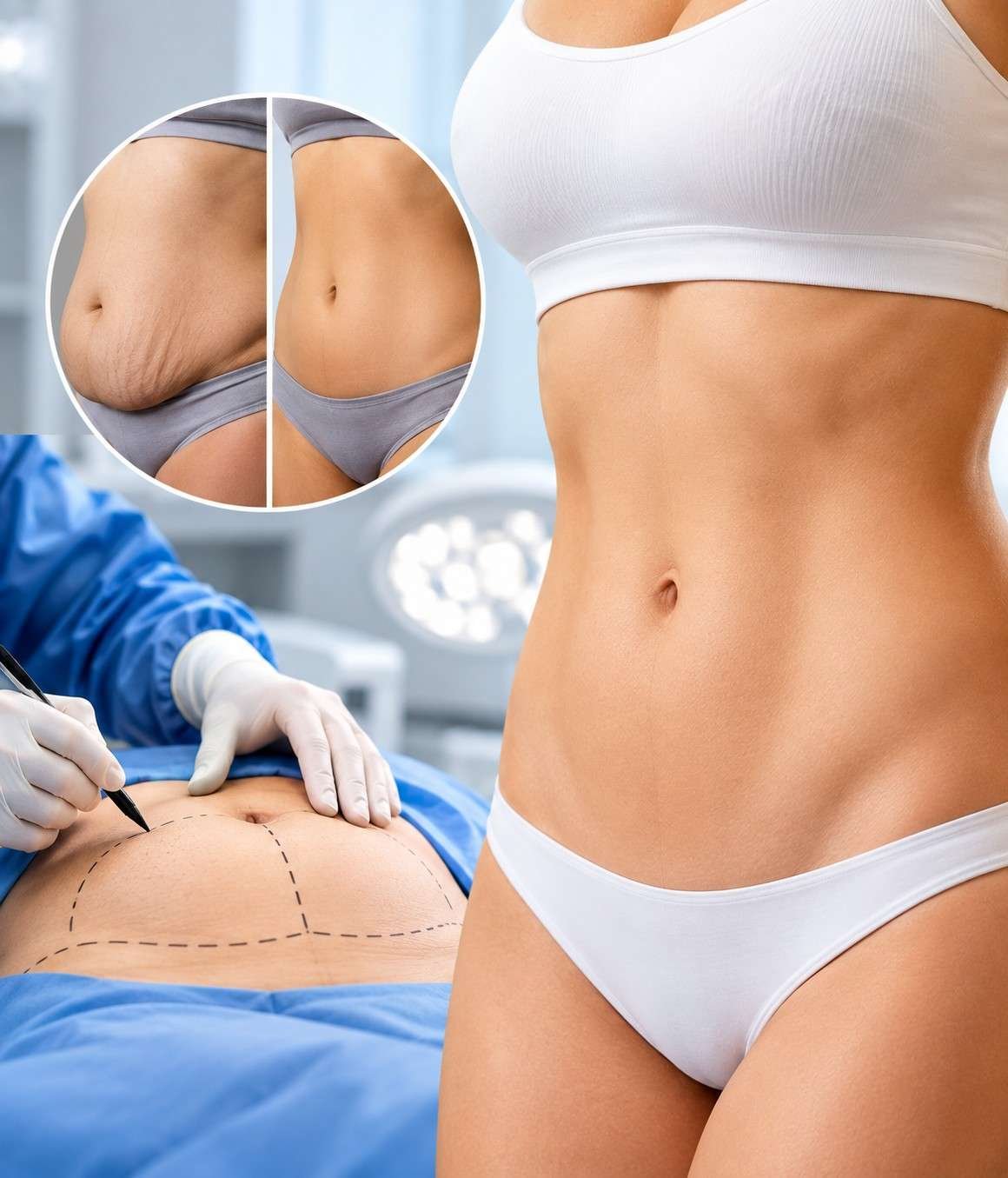
The abdomen changes across a lifetime. Skin stretches with pregnancy or weight gain and may not fully retract, leaving loose folds. Vertical abdominal muscles may also separate (diastasis recti), causing the stomach to bulge outward.
The surgeon removes excess skin along with underlying fat and tightens separated abdominal muscles. The navel is repositioned so it sits naturally against the reshaped wall.
Addresses loose skin after major weight loss or pregnancy, skin laxity, and structural muscle separation that exercise alone cannot correct.
Ideal for individuals with stable body weight, realistic goals, and persistent loose abdominal skin or muscle separation following lifestyle changes.
Liposuction mainly removes selected fat, whereas a tummy tuck deals with excess skin and tightening the lax abdominal wall. Some patients benefit from a combined approach.
| Feature | Tummy Tuck | Liposuction |
|---|---|---|
| Primary Focus | Excess skin and abdominal wall tightening | Selected pockets of localized fat |
| Excess Skin | Removed directly during surgery | Not removed; relies on natural skin elasticity |
| Fat Removal | Some, alongside skin excision | Primary purpose of the procedure |
| Abdominal Contour | Reshaped through skin, fat, and muscle layers | Refined by reducing localized fat deposits |
| Muscle Tightening | Tightens separated vertical abdominal muscles | Not addressed |
| Scarring | A longer lower-abdominal scar and a navel scar | Small, puncture-size marks |
| Suitability | Loose skin, post-pregnancy or weight loss changes | Good skin elasticity with isolated fat areas |
Surgical suitability requires a detailed clinical assessment. Procedure suitability may be affected by:
That is exactly what your consultation is for. Receive a detailed assessment at Symmetrica in Siliguri to guide your choices.
Planning looks at the amount of excess skin, fat distribution, skin quality, the state of the abdominal wall, muscle separation, previous surgery, weight stability, body proportions, your goals, and your medical history.
You describe what you would like to change and why. This discussion establishes your expectations and priorities.
Medical and surgical history, pregnancies, weight changes, smoking habits, and current medications are thoroughly reviewed.
The surgeon examines the abdomen, skin elasticity, fat distribution, abdominal wall strength, and surrounding anatomy.
Suitable surgical options are discussed, alongside non-surgical alternatives like liposuction or no treatment where relevant.
You receive clear details on expected healing timelines, procedural limitations, potential risks, and what surgery can and cannot do.
If surgery is appropriate, a personalized surgical plan is set out. A first visit is an assessment, allowing you to decide at your own pace.
A first visit is an assessment, not a commitment to surgery. Consultations are confidential and conducted directly with your plastic surgeon.
Recovery experiences vary depending on the extent of the surgery and individual healing. Below are general operational stages and care guidelines.
Swelling, bruising, tightness, and discomfort are normal. Pain management and comfort are maintained through prescribed medications. Standing fully upright may feel difficult initially.
A specialized abdominal compression garment is typically worn for several weeks to stabilize tissues, minimize movement, and control swelling.
Scheduled review visits allow your surgeon to inspect surgical dressings, check any drains, monitor wound healing, and manage your recovery timeline.
Short, gentle walks are encouraged early to support circulation, but heavy lifting and strenuous physical exercise must be avoided for several weeks.
Most patients resume desk-based work after about two weeks, while full physical clearance depends on your individual healing progress.
Swelling gradually eases over weeks to months, and incision scars mature slowly over many months to reveal the final abdominal contour.
Surgical suitability depends on a comprehensive clinical examination. A tummy tuck may be considered for:
A tummy tuck leaves a lower abdominal scar, and usually a second scar surrounding the navel. Scars look red or raised at first and change as they mature over many months. They can often be hidden by clothing, but surgery cannot be scar-free.
Risks include bleeding, infection, fluid collection (seroma), wound-healing delays (higher in smokers), blood clots in legs or lungs, wide or visible scars, numbness/sensation changes, contour asymmetry, or the possibility of revision surgery.
A Mommy Makeover is a personalized combination of procedures addressing post-pregnancy changes. It may combine a tummy tuck with breast surgery (lift or augmentation) or liposuction. It is a tailored plan where combinations and staging are decided strictly for patient safety and optimal results.
Under anaesthesia, an incision is made, excess skin and tissue are removed, the abdominal wall is repaired where appropriate, and the navel is repositioned if needed. Skin is closed in layers and monitored carefully during early recovery.
It is a surgical body-contouring procedure that removes excess abdominal skin, often with some fat, and may tighten the underlying abdominal wall muscles.
Abdominoplasty is the medical term for a tummy tuck. The scope varies from a mini tummy tuck below the navel to a full procedure, depending on individual anatomical requirements.
Mainly excess loose skin and subcutaneous fat. Separated vertical abdominal muscles may also be tightened. It does not remove stretch marks above the navel or visceral fat inside the abdomen.
No. Liposuction targets fat removal and does not remove loose skin. A tummy tuck removes excess skin and can tighten separated muscles. Both methods are sometimes combined.
Suitable candidates include individuals in good health, with stable body weight, realistic goals, and persistent loose skin or abdominal wall laxity, as confirmed by clinical evaluation.
Yes, it is often considered once childbearing is complete and weight has settled. Surgeons generally advise postponing surgery if you plan future pregnancies.
Yes, it can be evaluated once your weight has remained stable for a duration specified by your surgeon, addressing hanging folds of loose skin.
A personalized combination of post-pregnancy surgical options, which may include a tummy tuck, breast surgery, or liposuction, tailored to individual goals.
Many patients return to desk work after about two weeks, while heavy lifting and strenuous exercise are restricted for longer. Swelling gradually subsides over several months.
Yes. It leaves a horizontal scar across the lower abdomen, usually placed below the bikini line, along with a scar around the navel. Scars fade over time but do not disappear completely.
Risks include bleeding, infection, fluid collection (seroma), wound healing delays, blood clots, noticeable scarring, sensation changes, contour irregularities, and revision surgery.
Cost varies based on anatomy, procedural complexity, operating facility requirements, and clinical factors. An accurate estimate is provided after a clinical consultation.
Medical Disclaimer: The content on this website is provided for general informational purposes only and does not constitute formal medical advice. Individual surgical results vary. Consult a qualified plastic surgeon to discuss your personal medical status, risks, and treatment options.