
About Us
Contrary to popular belief, Lorem Ipsum is not simply random text. It has roots in a piece of classical Latin literature from 45 BC, making it over 2000 years old.
Contrary to popular belief, Lorem Ipsum is not simply random text. It has roots in a piece of classical Latin literature from 45 BC, making it over 2000 years old.
Some lines only show up when you do something. A frown while reading a message, a raised eyebrow in conversation, a squint against the sun, a broad smile in a photograph. Look at your face at rest and they may barely be there. Look at it in motion and they are hard to miss.
Botox is designed for that kind of line. It does not fill or plump anything. It temporarily reduces the activity of selected muscles, so that the lines those muscles create can look softer. The aim is control, not stillness: a face that still moves, with fewer of the creases that movement leaves behind.
Treatment at Symmetrica starts with a conversation about what actually bothers you. Whether Botox suits you depends on your face, how your muscles move and what you want to change, and the doctor will tell you if something else would serve you better.
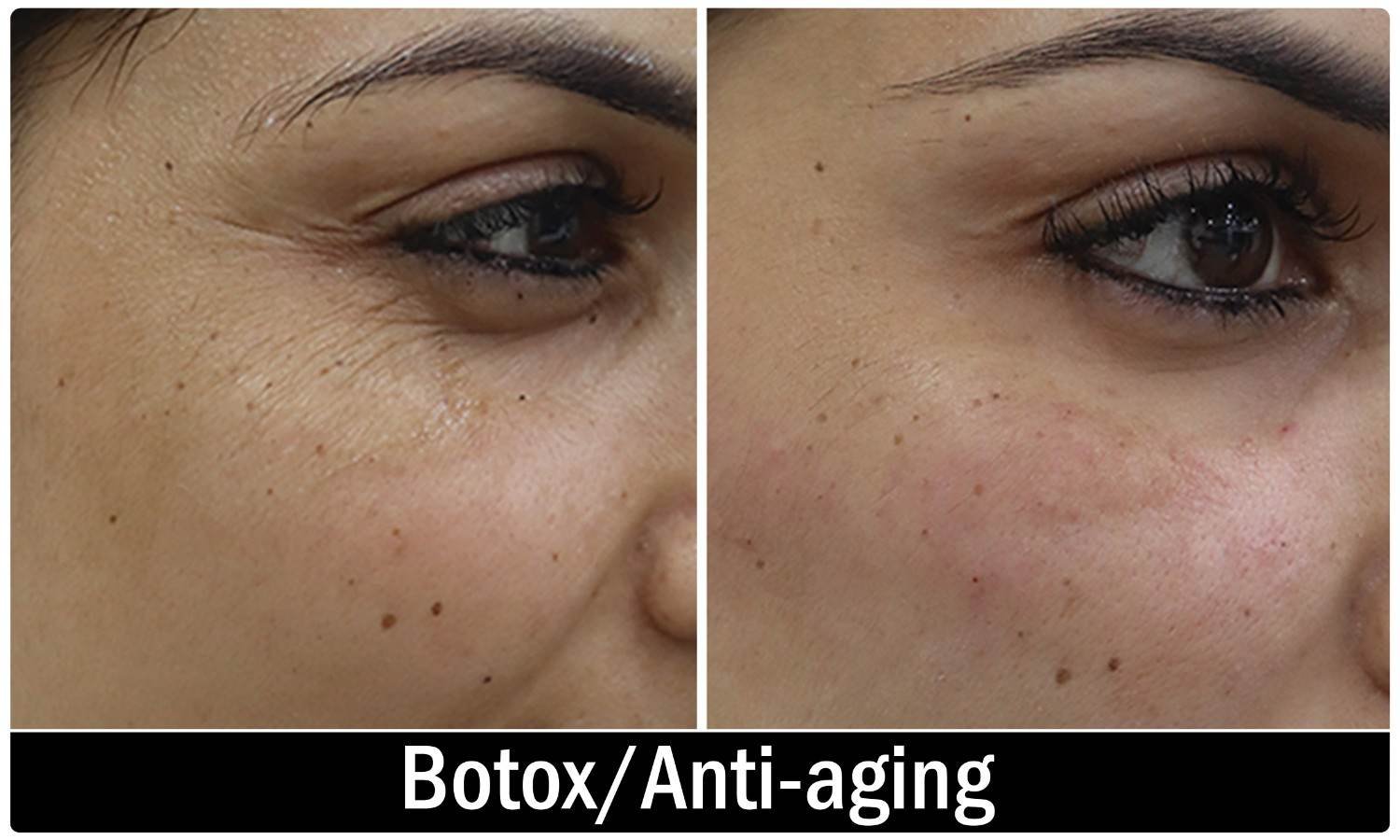
Botox is the most familiar brand name for botulinum toxin, a purified protein used in both medicine and aesthetics. In small, carefully placed amounts, it temporarily blocks the signal that tells a muscle to contract. A muscle that contracts less creates less creasing in the skin above it.
That is why treatment is targeted. It is planned around specific muscles that are producing specific lines, not the whole face. Done well, expressions such as smiling, frowning and raising your eyebrows stay recognisably yours.
It is just as important to be clear about what Botox does not do. It does not remove every kind of wrinkle, and it does not change skin texture, volume or sagging. Those are different problems with different answers.
Not every line on the face has the same cause, and that difference decides whether Botox is the right tool.
Dynamic lines appear or deepen when the face moves. Forehead lines when you raise your brows, frown lines when you concentrate and crow's feet when you smile are common examples. Because muscle movement creates them, reducing that movement can soften them.
Static lines are visible even when your face is fully relaxed. They tend to develop over years as skin loses firmness and volume, and sometimes after dynamic lines have been etched in for long enough to stay. Botox on its own is less suited to these.
Many people have a mixture of both. Static lines and volume loss are often discussed alongside dermal fillers, and broader ageing concerns sit within anti-ageing treatment. Where texture, pigmentation or overall skin quality is the main worry, skin treatments may be a better starting point. A consultation sorts out which group your lines fall into.
Three areas come up most often. Whether each is suitable for you is a decision for the examination, not a menu to choose from. Not everyone is suitable for treatment in every area, and some people only need one.
Horizontal lines across the forehead appear when you lift your eyebrows. They are among the most visible expression lines, and also the area where a heavy hand shows most. The forehead muscles also help hold the brows in position, so treatment here is balanced carefully against the frown area.
Vertical lines between the brows, often called frown lines or glabellar lines, form when you concentrate, squint or feel tense. Many people say they make them look tired or cross when they feel neither. This is among the most commonly treated areas.
Fine lines fanning out from the outer corners of the eyes show up when you smile or squint. Because they are tied to smiling, the goal is softening rather than erasing, so that a smile still looks warm. The skin here is thin, and planning is cautious.
They are often mentioned together, but they do different jobs. Neither is better than the other; they answer different questions.
| Treatment Option | What It Generally Addresses | Mechanism / Focus |
|---|---|---|
| Botox | Dynamic expression lines (forehead, frown lines, crow's feet) | Muscle Activity Reduction |
| Dermal Fillers | Volume loss and contour changes (cheeks, lips, chin, hollows visible at rest) | Volume & Shape Restoration |
A simple way to think about it: fine lines that appear when you move may point towards Botox, while a hollowing or flattening that is visible at rest may point towards fillers. Some people need one, some discuss both, and some need neither.
This is the question most first-time patients are really asking—they are less worried about lines than about looking blank. A natural result is possible, but it comes from planning, not luck.
Your facial anatomy, how strongly your muscles move, product dosage, and your personal goals all dictate the plan.
Good treatment softens selected lines without freezing your movement, ensuring your natural expressions remain recognisably yours.
Starting conservatively and adjusting later avoids an overly frozen appearance. Share your preference to stay expressive at the start.
Botulinum toxin is also an established option for excessive sweating (hyperhidrosis). By temporarily reducing the activity of nerves that stimulate sweat glands, it can lessen sweating in selected areas like underarms. Clinical assessment comes first to check for any underlying causes.
People usually enquire about forehead lines in photos, frown lines that convey tiredness or sternness, crow's feet, dynamic wrinkles, or excessive sweating. There is no fixed age; suitability depends on your anatomy, muscle movement, skin condition, and health history.
Consultations are confidential and conducted directly with your doctor to assess your goals and discuss if Botox or another treatment is right for you.
They are often mentioned together, but they do different jobs. Neither is better than the other; they answer different questions.
| Treatment Option | What It Generally Addresses | Mechanism / Focus |
|---|---|---|
| Botox | Dynamic expression lines (forehead, frown lines, crow's feet) | Muscle Activity Reduction |
| Dermal Fillers | Volume loss and contour changes (cheeks, lips, chin, hollows visible at rest) | Volume & Shape Restoration |
A simple way to think about it: fine lines that appear when you move may point towards Botox, while a hollowing or flattening that is visible at rest may point towards fillers. Some people need one, some discuss both, and some need neither.
This is the question most first-time patients are really asking—they are less worried about lines than about looking blank. A natural result is possible, but it comes from planning, not luck.
Your facial anatomy, how strongly your muscles move, product dosage, and your personal goals all dictate the plan.
Good treatment softens selected lines without freezing your movement, ensuring your natural expressions remain recognisably yours.
Starting conservatively and adjusting later avoids an overly frozen appearance. Share your preference to stay expressive at the start.
Botulinum toxin is also an established option for excessive sweating (hyperhidrosis). By temporarily reducing the activity of nerves that stimulate sweat glands, it can lessen sweating in selected areas like underarms. Clinical assessment comes first to check for any underlying causes.
People usually enquire about forehead lines in photos, frown lines that convey tiredness or sternness, crow's feet, dynamic wrinkles, or excessive sweating. There is no fixed age; suitability depends on your anatomy, muscle movement, skin condition, and health history.
Consultations are confidential and conducted directly with your doctor to assess your goals and discuss if Botox or another treatment is right for you.
Understanding the step-by-step process, timelines, and expected sensation from your consultation to the final result.
The consultation determines how your result looks. The doctor understands what bothers you, evaluates how your face moves, determines if your lines are dynamic, and advises if Botox or another approach is best.
Following your personalized plan, your face is reassessed and cleansed. Small, carefully targeted injections are administered to selected muscles, followed by clear post-treatment instructions.
Most people experience brief discomfort or a slight pinching sensation. While not completely painless, each injection is very quick. Please inform the team if you are anxious about needles.
Botox works gradually as muscle activity reduces over the days after treatment. Changes are often noticed within the first week, with line softening continuing to develop thereafter.
Results commonly last for a number of months depending on muscle activity and personal response. If you choose to stop, muscle activity returns naturally and lines gradually become visible again.
Botox is a medical treatment, so what you share with the doctor shapes your personalized advice. Please be sure to mention:
Mild redness, small bumps, or mild localized swelling at the injection sites are normal and usually settle quickly. Avoid pressing, rubbing, or massaging treated areas unless instructed otherwise.
Ask your clinician during your visit when it is safe to reapply makeup, restart your skincare regimen, engage in heavy exercise, or undergo facials and heat treatments.
Duration varies between individuals. Results typically last a few months rather than years, depending on muscle strength, treatment history, and individual response.
Botox does not permanently halt muscle movement. As its effect wears off, normal muscle action resumes, and lines gradually reappear without any sudden or adverse side effects.
Yes, that is the aim. Botox is planned to soften selected lines, not to freeze the face. You should still be able to smile, frown and raise your eyebrows, though some movement in treated areas will be reduced. Tell the doctor if keeping expression matters most to you.
Plan well in advance rather than days before. The effect builds gradually, and any bruising or swelling needs time to settle. If you have a wedding, interview or other date in mind, mention it at the consultation so the timing can be planned sensibly.
It can. Small bruises at the injection sites are possible and usually fade. Blood-thinning medicines and supplements can make bruising more likely, so tell the doctor what you take. Avoid rubbing the treated areas.
Your clinician will tell you when it is fine to wear makeup and restart your usual skincare, and you should follow that advice. In general, avoid pressing or massaging the treated areas, and ask about facials, heat treatments and exercise before resuming them.
Because the effect is temporary, treatment needs repeating if you want to maintain it. How often varies from person to person. Your doctor will talk about maintenance after seeing how you respond, and may suggest a review if a small adjustment is needed.
Possibly. Treatment can be planned for one area, but forehead lines are connected to the muscles that hold your brows, so the doctor will look at the frown area too before deciding. The plan depends on your anatomy and goals.
They can be discussed together. Many people have concerns in more than one area, and treatment is planned around the whole upper face. Whether more than one area is appropriate depends on your anatomy, goals and assessment.