
About Us
Contrary to popular belief, Lorem Ipsum is not simply random text. It has roots in a piece of classical Latin literature from 45 BC, making it over 2000 years old.
Contrary to popular belief, Lorem Ipsum is not simply random text. It has roots in a piece of classical Latin literature from 45 BC, making it over 2000 years old.
Eyelid surgery, medically called blepharoplasty, is an operation that removes or repositions excess skin, and sometimes fat, from the upper or lower eyelids. It may be considered for heavy-looking upper lids, under-eye bags or age-related eyelid changes. Whether it is suitable, and what it can realistically change, depends on your eyelid anatomy and health, and is decided after a clinical assessment.
The skin of the eyelids is the thinnest on the body, and it shows change early. With time it loosens, the muscle beneath it weakens, and the small pads of fat that cushion the eye can bulge forward. The result may be a fold of skin resting on the upper lid, or a puffiness beneath the eye. Blepharoplasty addresses these changes by removing or repositioning tissue.
The operation is usually described by the lid it treats. Upper blepharoplasty works on the upper lids, where excess skin can crowd the lid crease or make the eyes look heavy. Lower blepharoplasty works on the lower lids, where the focus is usually fat and sometimes loose skin. Some people have both done together.
Most blepharoplasty is done for appearance, but not all. When hanging upper-lid skin is heavy enough to restrict the upper field of vision, surgery may be considered for functional reasons after the eyes have been properly assessed. Either way, the plan depends on your anatomy, your skin, your brow position and what you hope to change. Two people with similar-looking eyelids can need quite different operations.
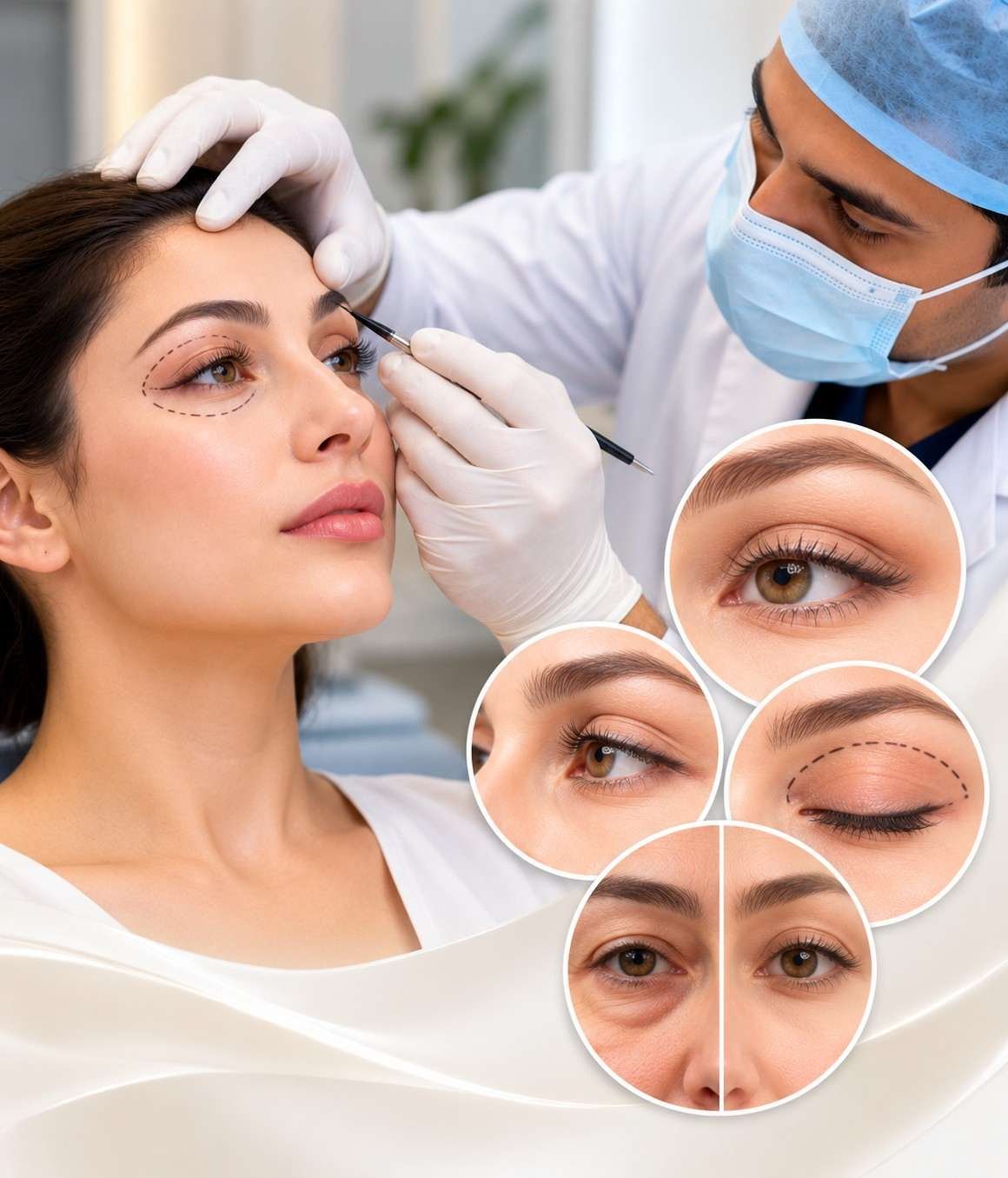
None of the following means you need surgery. They are the concerns a surgeon may evaluate alongside non-surgical possibilities during an in-person assessment.
Where a fold of loose skin hangs over the natural lid crease or rests on the upper lashes.
Which can crowd the upper eye area and make the eyes look continually tired or smaller.
Caused by fat deposits bulging forward from beneath the lower eyelid area.
Which can have temporary or medical causes (allergies, fluid retention) that surgery will not fix.
General looseness or laxity of both the skin and underlying support muscles over time.
Where one eyelid crease or fold sits visibly different from the opposite side.
Upper blepharoplasty generally targets loose skin, and sometimes a little fat, in the upper lid. The incision is usually placed in the natural lid crease so the scar can settle into the fold. It can make the lids look lighter and the eye area less crowded, and in some patients it removes skin that was getting in the way of vision.
First, a droopy lid is not always excess skin: when the muscle that lifts the lid is weak (ptosis) or the brow itself has dropped, a different operation is needed. Second, for patients who want to create an upper-lid crease (Asian or “double eyelid” surgery), the surgeon builds a crease rather than removing excess skin.
The lower lid is more complicated than the upper. Under-eye bags usually come from fat that has moved forward, sometimes with a hollow beneath it (the tear trough) and loose skin on top. Lower blepharoplasty may remove or reposition this fat and tighten skin where needed. Depending on the approach, the incision is either just below the lashes or inside the lid.
Because the lower lid supports the eye’s surface, the operation is planned individually around skin quality, lid tightness and cheek support. Surgery changes bags and loose skin; it does not reliably change dark circles caused by pigmentation or thin skin.
| Feature | Upper eyelid surgery | Lower eyelid surgery |
|---|---|---|
| Typical concern | Excess skin, a heavy or hooded look | Bags, puffiness, loose skin |
| General area | Upper lid, around the natural crease | Lower lid, below the lashes or inside the lid |
| Common goals | Lighter lids, a less tired look, sometimes a clearer upper field of vision | Smoother under-eye contour, a rested look |
| Individual considerations | Brow position, ptosis, lid crease type, dryness | Lid tightness, tear-trough hollow, skin quality, cheek support |
Exploring blepharoplasty begins with an open conversation and a thorough clinical evaluation to ensure safe, realistic, and personalized care.
You explain what you notice about your eyelids and what changes you would like to achieve during your personal consultation.
Eye problems, allergies, medicines, smoking, and previous surgery are thoroughly reviewed for your safety.
The surgeon examines the lids, brow position, surrounding face, lid tone, and checks tear production.
Surgical and non-surgical approaches are evaluated, including the realistic option of not treating.
You hear what healing involves, expected downtime, and any potential risks specific to your health and eyes.
Surgery may be advised, deferred, or not recommended. You decide in your own time with no obligation.
A first visit is an assessment, not a commitment to surgery.
Details vary with the patient and the plan, but the sequence is broadly the same.
Before surgery, the surgeon marks the lids while you are sitting up, because gravity shows how much skin is truly in excess.
Incisions are placed where they will be least visible: in the upper-lid crease, and just beneath the lower lashes or inside the lower lid.
Through these incisions, the surgeon removes or repositions excess skin, muscle and fat as planned.
The incisions are closed with fine sutures, and you are observed for a period afterwards.
Healing is gradual, and the timelines below are typical rather than promised.
Swelling and bruising are usual, often greatest in the first few days. The lids may feel tight, and the eyes dry or irritated. Cold compresses and keeping your head raised often help.
Stitches are typically removed, and the follow-up visit lets the surgeon check healing.
Many people return to desk work as bruising fades. Contact lenses, eye make-up, and strenuous exercise are usually held off for a while longer.
Swelling settles gradually and the scars fade. The final contour takes longer to appear than most people expect.
Risks and Limitations: Every operation carries risk. Most people heal without serious problems, but you should know what can happen:
A photograph of a result you admire shows what happened to someone else’s face—it cannot tell you what would suit yours. In consultation, the surgeon weighs key factors to guide your decision.
Evaluating what you want to change, and how much alteration is realistic and achievable.
Assessing underlying bone structure, cartilage, fat distribution, and facial symmetry.
Examining skin condition, elasticity, thickness, and age-related tissue changes.
Reviewing your health background, previous surgical or aesthetic procedures, and healing factors.
Considering the downtime you can realistically take and determining if surgery is suitable for you at all.
It is an operation to remove or reposition excess skin and sometimes fat from the eyelids, to address heavy upper lids, under-eye bags or ageing changes.
Blepharoplasty is the medical term for eyelid surgery. It can be done on the upper lids, the lower lids or both.
Upper surgery mainly treats excess skin on the upper lid. Lower surgery mainly treats fat bulges and loose skin beneath the eye. They have different incisions, risks and recovery.
Healthy adults with realistic goals and eyelid changes that fit the operation may be suitable. Eye conditions, smoking and certain medicines can change that. Only an assessment can say.
Lower blepharoplasty may help bags caused by fat or loose skin. It won’t reliably change dark circles from pigment, and puffiness from other causes may not respond.
If loose upper-lid skin is restricting your upper field of vision, removing it may help, but this has to be confirmed on assessment and can’t be promised.
Early recovery is often one to two weeks, with swelling and bruising easing in that time. Fuller settling takes weeks to months and varies between people.
Most obvious swelling eases over the first couple of weeks. Mild swelling can linger for a few months, and it often looks different from morning to evening.
They include swelling, bruising, bleeding, infection, scarring, dry eyes, asymmetry, difficulty closing the eyes, lid position changes and possible revision. Your risks depend on your case.
Yes, every incision leaves a scar. Upper-lid scars lie in the natural crease and usually fade well. Inside-the-lid lower incisions leave no visible skin scar. Scarring varies.
Cost depends on the individual procedure, whether one or both lids are treated, your assessment and other clinical factors. The team can give an estimate after consultation.